When security researcher Orange Tsai and the DEVCORE research team announced CVE-2024-4577, the vulnerability immediately drew comparisons to classic infrastructure vulnerabilities from the early 2010s. What makes CVE-2024-4577 uniquely fascinating—and dangerous—from an offensive and defensive engineering perspective is that it does not stem from a flaw in memory safety or application business logic. Rather, it is the consequence of complex, legacy interactions between web server CGI specifications, Windows code page conversions, and PHP parameter handling.
Historical Context: The Shadow of CVE-2012-1823
To understand why this vulnerability exists, one must look back to 2012. Under RFC 3875 (the Common Gateway Interface standard), when a web server passes a query string to a CGI program without an unescaped equals sign (=), the query string is treated as command-line arguments to the executable rather than environmental variables.
Back in 2012, researchers discovered that passing switches such as -s, -d, or -b directly to php-cgi.exe allowed remote actors to read server source code or inject arbitrary runtime directives. In response, PHP engineers introduced parameter filtering routines that explicitly stripped or blocked leading hyphens (-) from CGI input streams.
For twelve years, that defense was considered robust—until researchers investigated how Microsoft Windows handles multi-byte character mapping when interacting with standard Win32 APIs.
The Best-Fit Character Mapping Trap
Windows operating systems incorporate an internationalization feature known as Best-Fit mapping. When a character in Unicode cannot be directly represented in the target local ANSI code page, the Win32 API attempts to find the 'closest resembling' character rather than returning an error.
In several common code pages (such as Code Page 950 for Traditional Chinese, Code Page 936 for Simplified Chinese, and Code Page 932 for Japanese), the soft hyphen character (Unicode 0x00AD) is silently converted by the operating system into a standard ASCII hyphen (0x2D, or -).
The sequence of vulnerability execution unfolds as follows:
- An attacker transmits an HTTP request containing a URL-encoded soft hyphen:
%ad. - PHP’s parameter sanitization code checks the input for standard hyphens (
0x2D). Seeing0xAD, it concludes the character is harmless and permits execution. - When Windows invokes the process via system APIs, the Best-Fit conversion automatically maps
0xADback into a standard ASCII hyphen (-). - The PHP CGI binary now receives what it believes to be legitimate command-line flags directly from the remote web request.
From Argument Injection to Arbitrary Remote Code Execution
Once an attacker can pass arbitrary flags to the PHP interpreter, transforming the argument injection into full arbitrary code execution requires only standard PHP runtime directives. By leveraging the -d (define INI entry) directive, an attacker can dynamically alter PHP’s configuration for that single request.
Specifically, threat actors chain two powerful configuration flags:
allow_url_include = 1: Enables PHP’s stream wrappers to evaluate external or synthetic data inputs as native code.auto_prepend_file = php://input: Instructs the PHP runtime to automatically parse and execute the raw body of the HTTP POST request prior to evaluating any target script.
Through this vector, the attacker sends a POST body containing raw PHP code (such as shell staging scripts, memory-resident reverse shells, or reconnaissance commands), achieving instantaneous remote command execution with the privileges of the web server service account.
Enterprise Attack Surface and Infrastructure Exposure
While modern production architectures favor Linux containers running PHP-FPM behind NGINX, a surprising volume of global enterprise and public-sector infrastructure continues to rely on Windows-based web hosting:
- Legacy Enterprise Intranets: Internal document management, ERP dashboards, and legacy billing tools frequently run on long-standing Windows Server installations.
- Development Environments Exposed to WAN: Developers running XAMPP, WampServer, or custom Apache setups on local workstations that are reachable via corporate VPNs or public IP forwarding.
- Shared Hosting Platforms: Regional hosting providers delivering shared Windows web hosting packages often utilize generic CGI handlers across thousands of customer tenant directories.
Hardening and Permanent Defensive Architectures
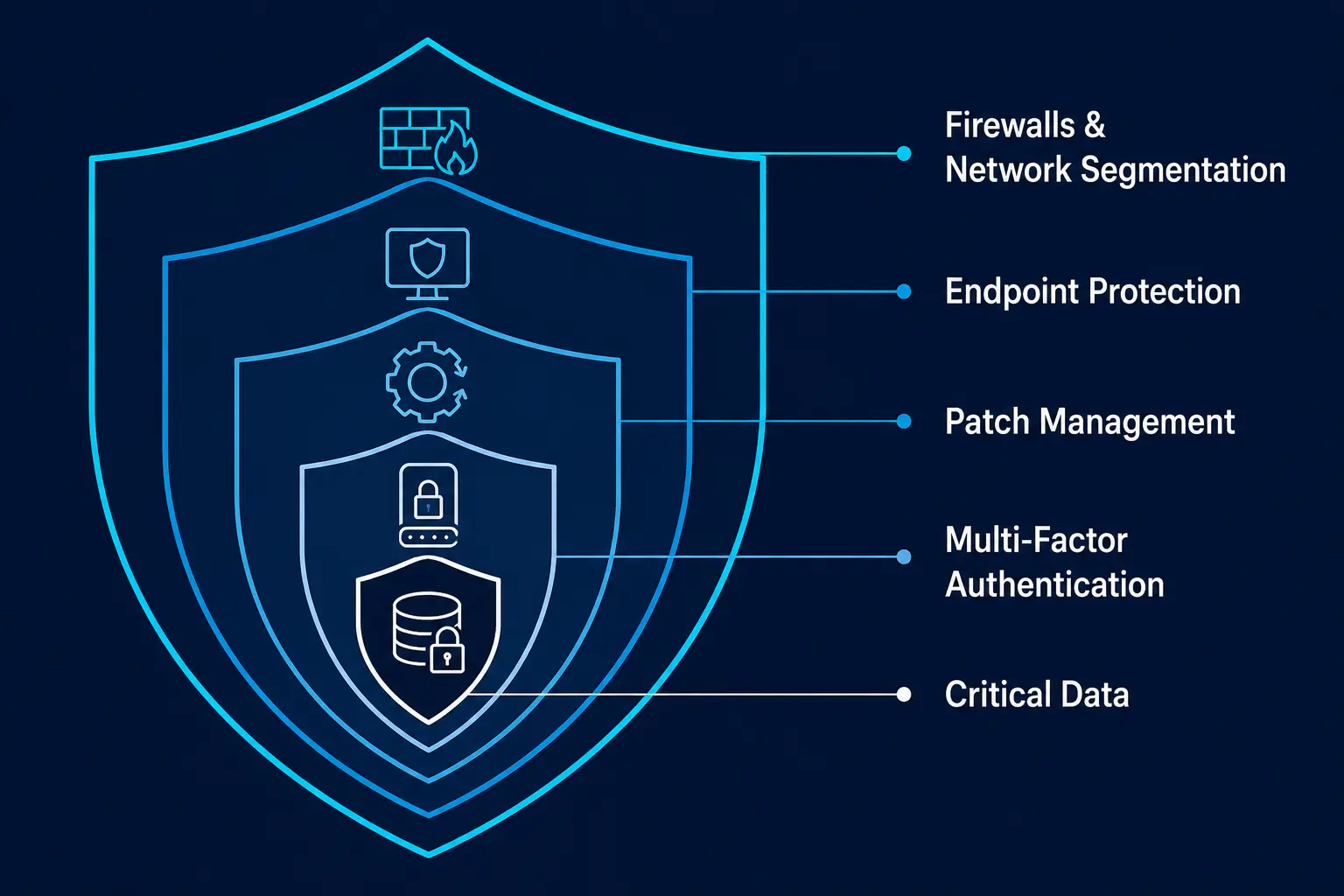
Remediating CVE-2024-4577 permanently requires a multi-layered defense strategy:
1. Direct Runtime Patching
Ensure that all PHP binaries across staging, development, and production are updated to PHP 8.3.8+, 8.2.20+, or 8.1.29+. In these releases, PHP incorporates explicit encoding checks that account for Windows Best-Fit behavior prior to system dispatch.
2. Architecture Transition: Abandon CGI for FastCGI
Traditional CGI spawns a new operating system process for each incoming request, introducing both high latency and broad attack surfaces. Modern architectures should exclusively implement FastCGI (via mod_proxy_fcgi or PHP-FPM), where request parameters are passed as structured environment arrays rather than raw CLI process arguments.
3. Web Application Firewall (WAF) Rule Enforcement
At the perimeter edge, configure WAF inspection rules to drop any incoming URI containing soft-hyphen byte sequences (%ad, %AD) or command parameter sequences targeting CGI extensions. For Apache deployments where updates cannot be applied immediately, the following rewrite rule can be applied globally:
RewriteEngine On
RewriteCond %{QUERY_STRING} ^(%ad|-).* [NC]
RewriteRule .* - [F,L]
Conclusion and Key Takeaways
CVE-2024-4577 serves as a poignant reminder that software security boundaries do not exist in isolation. Even when an application layer has maintained defensive filters for over a decade, underlying operating system behaviors, legacy protocols, and character encoding nuances can silently dismantle assumptions. Rigorous patch tracking, legacy protocol deprecation, and defensive depth remain mandatory for resilient web infrastructure.

Prince Anichi
Founder and Lead Technology Editor at Ortechy. Covering digital economy shifts, tech ecosystems across Africa, cybersecurity intelligence, and emerging software platforms.