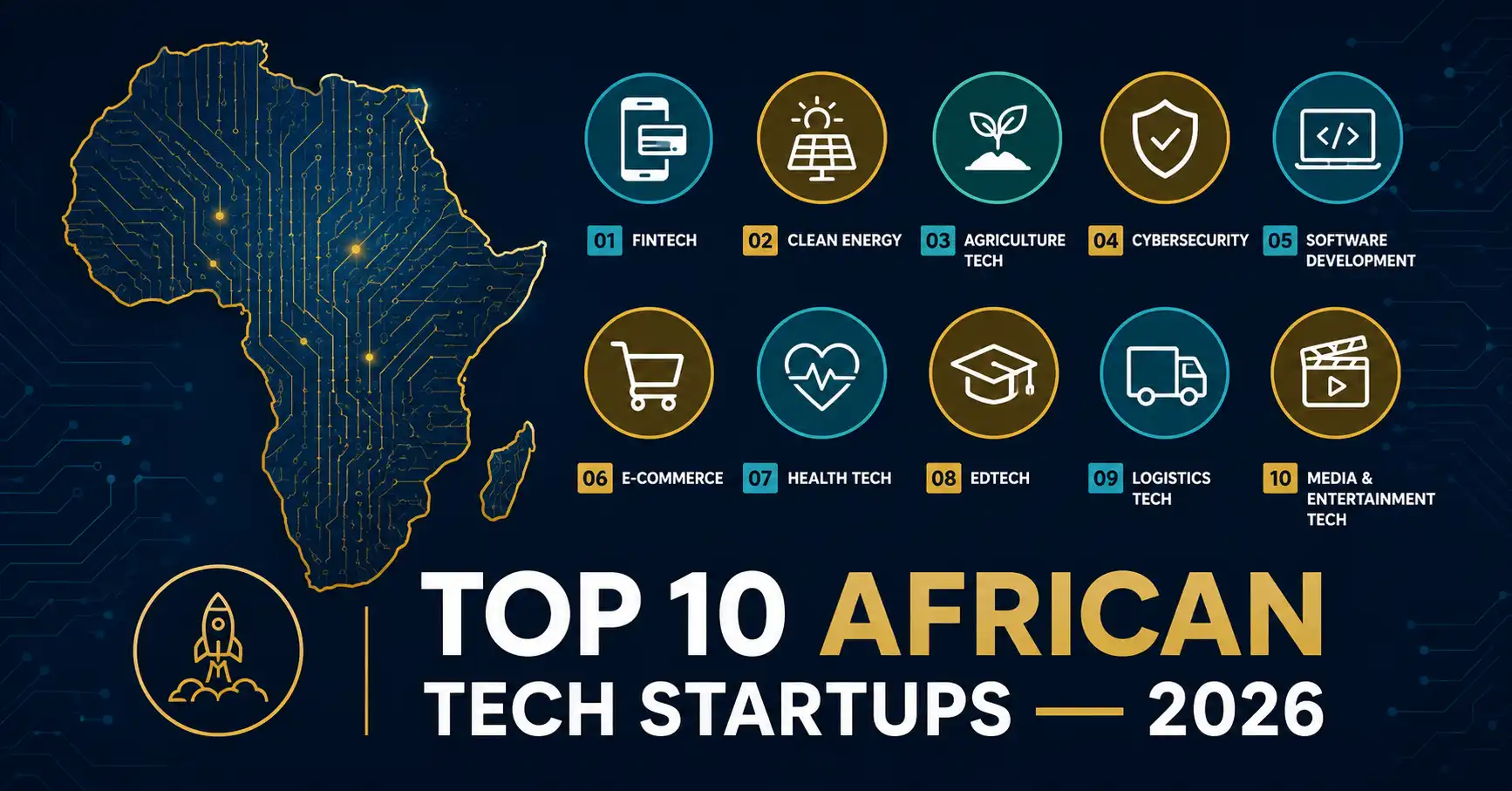
Nine African companies now carry unicorn status, and two of them, Nigeria’s Moniepoint and South Africa’s TymeBank, only joined that club in the past two years. This is the clearest sign yet that African tech startups to watch in 2026 are no longer a niche curiosity for global investors. They are becoming a serious asset class.
This guide profiles ten companies building real infrastructure across fintech, energy, agriculture, and personal safety. Each one solves a specific problem that legacy systems in its market have failed to fix. Therefore, each entry includes the founder, the funding history, and the numbers that back up why it made this list.
Now, let us look at why capital keeps flowing into the continent, then break down the ten startups themselves, one sector at a time.
Why African Tech Startups Are Drawing Record Global Investment in 2026
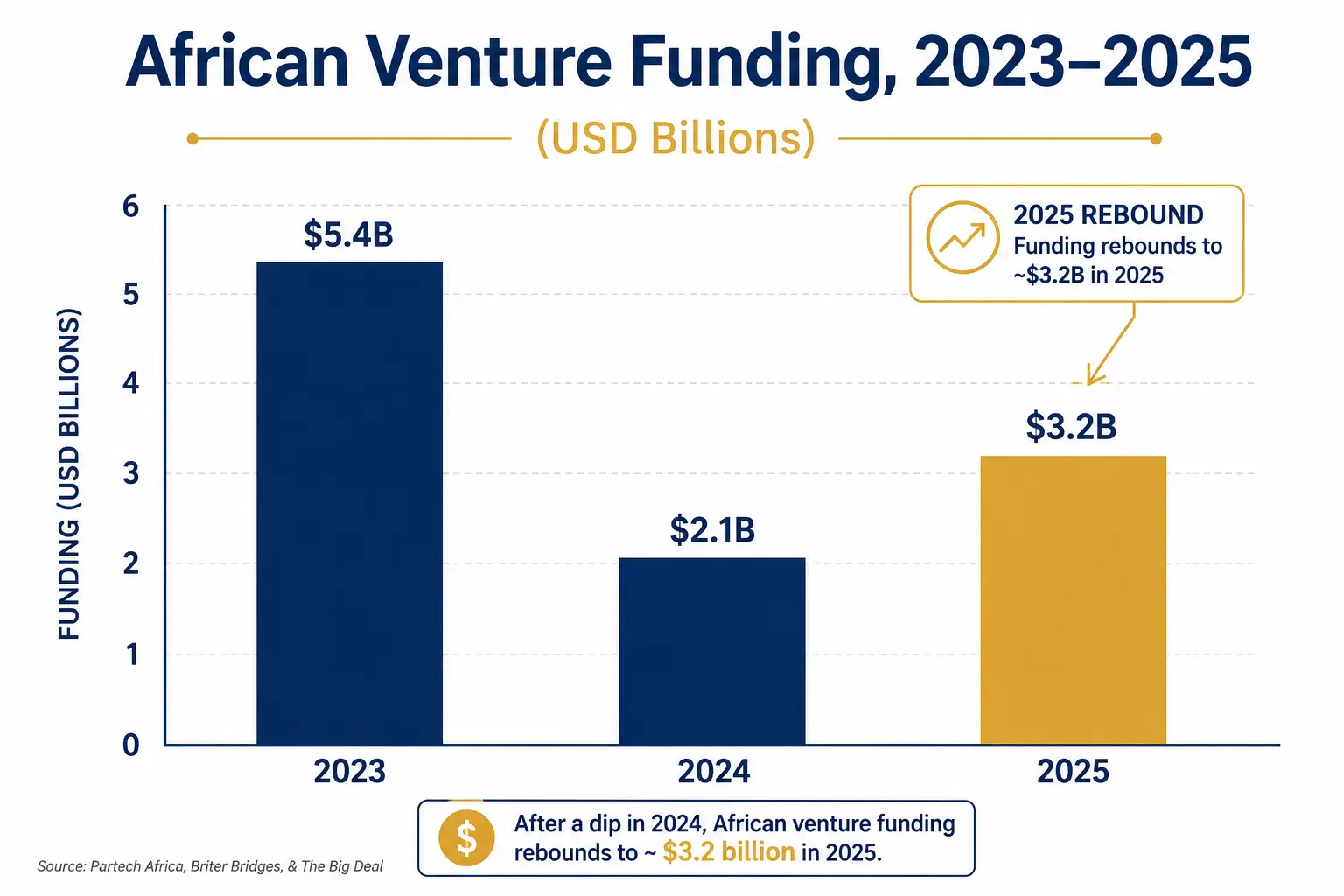
African venture funding rebounded to roughly USD 3.2 billion in 2025, surpassing 2023 levels after two difficult years. Fintech alone captured about 45 percent of that total, but agritech, healthtech, and climate technology are catching up fast, as detailed in Who Owns Africa’s 2026 entrepreneur rankings.
Also notable, nearly half of the funding raised by companies on Bloomberg’s 2026 watchlist came from African backers rather than foreign funds. This matters because it signals that local capital markets are finally maturing enough to back their own founders, according to Empower Africa’s summary of Bloomberg’s African startup research.
In practice, this shift changes who founders answer to. A startup funded mainly by African investors can design products around African realities first, rather than retrofitting a model built for Silicon Valley or London. That difference shows up clearly in the ten companies below.
Fintech Leaders Powering Africa’s Digital Economy
Fintech remains the backbone of the African tech startup story, and 2026 is proving that profitability, not just growth, now decides who wins. Four companies stand out for turning financial access into an actual business model.
Moniepoint: Nigeria’s Profitable Fintech Unicorn
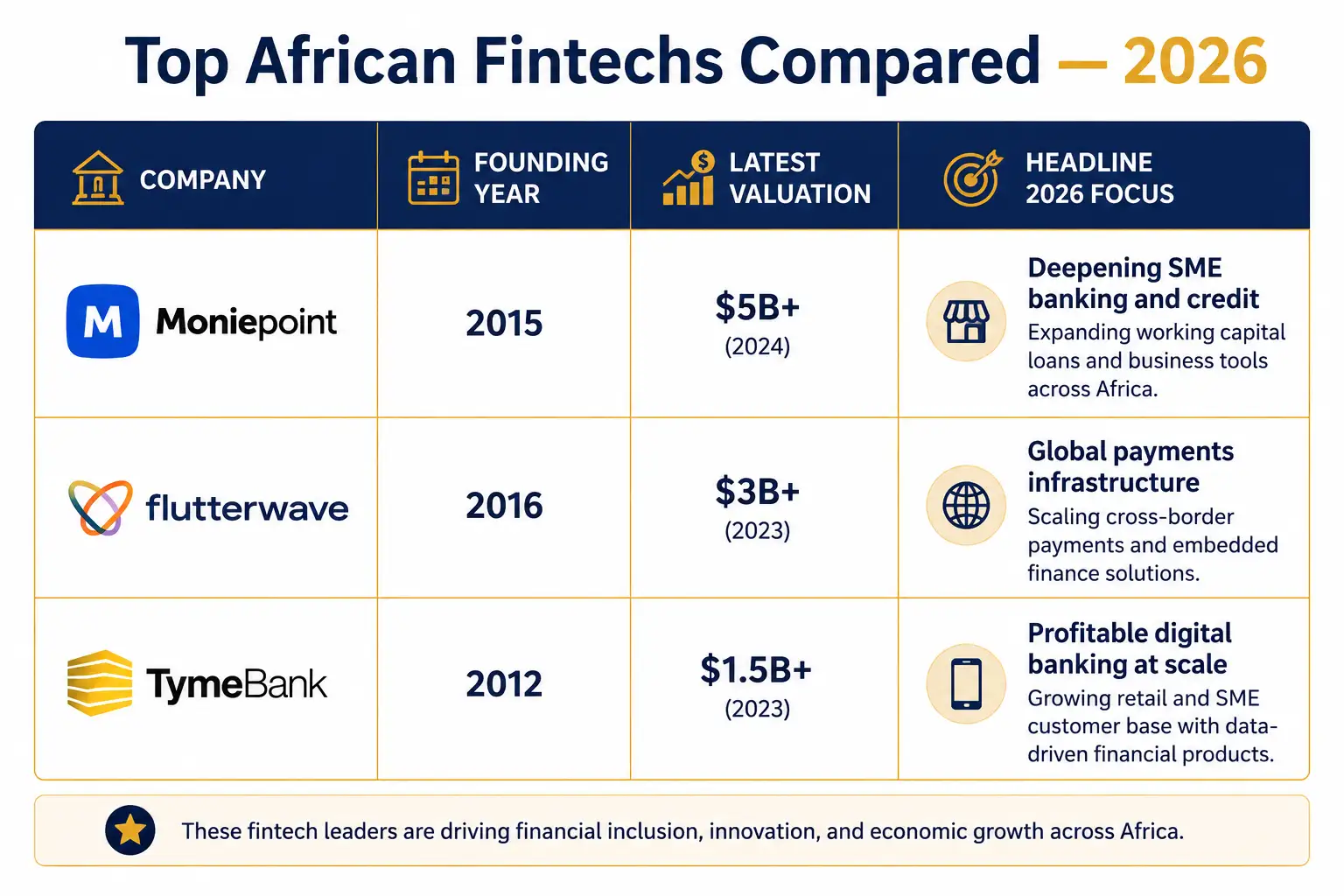
Tosin Eniolorunda built Moniepoint out of TeamApt, a software venture he started back in 2015. Following a USD 110 million Series C round in late 2024, the company crossed the billion dollar valuation mark and became one of Nigeria’s newest unicorns.
The results since then have been striking. Moniepoint now processes over USD 22 billion in monthly transactions for around 10 million small business customers, and it reached profitability in 2025, a rare feat in African fintech. In 2026, the company is targeting expansion into Kenya along with new remittance corridors linking Nigeria to the United Kingdom.
What this means in practice is that Moniepoint has cracked a problem most fintechs never solve, which is turning a lending and payments platform for informal merchants into a profitable business at scale. That template will likely get copied across other African markets this year.
Flutterwave: The Cross-Border Payments Powerhouse
Olugbenga Agboola, a former engineer at Standard Bank and PayPal, founded Flutterwave in 2016 to remove the friction from cross-border payments. The company now runs headquarters in both Lagos and San Francisco, and it processes billions of dollars a year for global enterprises and local merchants alike.
Flutterwave still holds a valuation above USD 3 billion, making it one of the continent’s most valuable startups. Because Agboola is pushing further into North Africa and embedded finance in 2026, expect the company to lean harder into profitability after some well documented leadership changes in prior years.
TymeBank: Africa’s Digital Banking Unicorn Going Global
TymeBank, part of the Singapore headquartered Tyme Group, hit profitability in December 2023, less than five years after its 2019 launch. That milestone helped the bank close a USD 250 million Series D round led by Brazil’s Nubank, pushing its valuation to USD 1.5 billion, as reported by TechCrunch’s coverage of the funding round.
The bank operates a hybrid model, pairing a digital app with self-service kiosks inside retail stores such as Pick n Pay. This means customers can open an account and print a debit card without ever visiting a traditional branch. By mid-2025, Tyme Group had grown to serve over 17 million customers across South Africa and the Philippines, according to Tech In Africa’s reporting on the bank’s growth. Vietnam and Indonesia are next on the expansion list, with an IPO targeted for 2028.
Nala and Rafiki: Building the Rails for Diaspora Remittances
Benjamin Fernandes, a former CNBC Africa presenter, founded Nala in Tanzania in 2017 as a consumer remittance app. However, the company has since evolved into Rafiki, a business to business payments infrastructure product that now handles transfers into 11 African markets.
Nala raised USD 40 million in 2024 and is already profitable, a detail that separates it from many remittance startups still burning cash. Fernandes wants Rafiki to become the default payout network for global remittance firms tapping into Africa’s roughly USD 100 billion annual diaspora flows in 2026.
Energy and Climate Innovators Closing Africa’s Infrastructure Gap
Unreliable power and broken cold chains still hold back hundreds of millions of people across the continent. These two companies are attacking that gap from opposite ends, one through solar financing and the other through refrigeration.
M-KOPA: Financing Solar Power and Smartphones Across East Africa
Jesse Moore co-founded M-KOPA in Kenya back in 2011, using a pay-as-you-go model that lets customers finance solar home systems through mobile money instalments. Since then, the company has financed productive assets worth more than USD 1 billion for over 7 million customers across East and West Africa.
Revenue climbed to nearly USD 416 million in 2024, and M-KOPA has since expanded into smartphone financing, small loans, and insurance products. Now, Moore is planning a deeper push into West Africa in 2026, alongside a new electric mobility financing option that could open up motorbike and vehicle ownership for gig workers.
Koolboks: Solar-Powered Cooling for Off-Grid Retailers
Ayoola Dominic designed Koolboks to solve a problem most urban shoppers never think about, namely how a rural retailer keeps food cold without a stable power grid. The refrigerators use an ice and water cooling battery that holds temperature for days after the sun goes down.
Koolboks currently produces around 2,400 units a year across factories in Nigeria, Kenya, and Uganda, and it is seeking USD 23 million to scale further. Because most of its customers are women running small food and drink businesses, the company frames its 2026 growth plan explicitly around female entrepreneurship in perishable goods.
Agritech Startups Tackling Food Security
Post-harvest losses in some African regions reach as high as 40 percent, according to sector estimates cited by Who Owns Africa. Two startups are chipping away at that number from different angles, one through farm credit and the other through waste conversion.
Apollo Agriculture: Smart Loans for Kenyan Farmers
Apollo Agriculture gives Kenyan smallholder farmers access to credit for seeds, fertiliser, and other inputs, then structures repayment around the farmer’s actual crop sales. The company tracks that repayment cycle through mobile phone data rather than traditional collateral, which is what makes lending to farmers without land titles or bank records viable in the first place.
This model matters because farm credit has historically been one of the hardest products to underwrite profitably in East Africa. In practice, tying repayment to harvest timing reduces default risk for the lender while giving farmers a fairer shot at boosting yields.
Amesect: Turning Organic Waste into Fertiliser
Founded in 2023 by Elsje Pieterse, Brendes Gresse, and Dave Stewart, Amesect converts organic waste into fertiliser and animal feed using insects. An entomologist leads the company, an unusual choice for a startup, but a fitting one for the biological problem it is solving, as outlined in TheTechTower’s breakdown of Bloomberg’s 2026 Africa list.
Amesect targets fast growing African cities where municipal waste collection has never kept pace with urban expansion. This means the company is effectively building private infrastructure to replace a public service that has fallen behind, and that gap is only widening as cities grow.
Consumer Tech and Safety Platforms Redefining Everyday Life
Not every promising African startup solves an infrastructure problem directly. Some are building new consumer habits around entertainment and personal safety instead, and both companies below have found real traction doing exactly that.
Gowagr: Reinventing Prediction Markets in Nigeria
Gowagr is often described as Nigeria’s answer to Polymarket, letting users make predictions across sports, entertainment, and politics. The platform is deliberately trying to move beyond the stereotype of gambling, positioning itself instead as a social and interactive prediction tool, according to Techpoint Africa’s 2026 startups to watch list.
In under two years, Gowagr has attracted close to 200,000 users. The company has also expanded into esports and fantasy gaming, which gives it more than one path to keep users engaged beyond a single prediction category.
Aura: On-Demand Emergency Security in South Africa
Warren Myers and Ryan Green founded Aura back in 2017 to fix a real gap, namely that public emergency services in many African cities are slow, underfunded, or simply unavailable. Aura’s app connects users directly to private emergency response and security providers instead of routing through overwhelmed public dispatch systems.
The company raised USD 14.5 million in a Series B round from the Cathay AfricInvest Innovation Fund. Because personal safety is such a persistent daily concern in many South African cities, Aura’s growth suggests private emergency response could become a mainstream category rather than a luxury add-on.
What These African Tech Startups to Watch in 2026 Have in Common
Every company on this list is solving a problem created by a system that has not kept pace with population growth or infrastructure investment. Whether that is banking, farm credit, cooling, or emergency response, the pattern is the same: build the missing rail, then monetise the traffic that runs on it.
- Profitability now matters as much as growth, with Moniepoint, TymeBank, and Nala all reaching profitability before or shortly after their largest funding rounds
- Local capital is playing a bigger role, with nearly half of Bloomberg’s 2026 watchlist funding coming from African investors
- Mobile money and phone data now underwrite risk, replacing traditional collateral in lending products from Apollo Agriculture to M-KOPA
- Founders are targeting regional expansion early, rather than waiting to dominate a single home market first
This means the African startup ecosystem is maturing past its early hype cycle. Investors are rewarding unit economics over headline growth, and founders who understand that shift are the ones building durable companies rather than short-lived ones.
Frequently Asked Questions
Which African country has the most tech startups to watch in 2026?
Nigeria and South Africa lead the continent, appearing most often across major 2026 watchlists from Techpoint Africa and Bloomberg. Kenya and Tanzania also feature prominently, particularly in fintech and agritech.
How many African startups have reached unicorn status?
Africa had nine unicorns as of early 2026, with Moniepoint and TymeBank joining the list most recently after their Series C and Series D rounds. Flutterwave remains the most valuable, at over USD 3 billion.
Why is fintech still the dominant sector among African tech startups?
Fintech captured about 45 percent of Africa’s 2025 venture funding because financial exclusion remains widespread. Startups solving payments, lending, and banking access have the clearest path to large user bases across fragmented markets.
Is African startup funding increasing in 2026?
Yes, venture funding rebounded to roughly USD 3.2 billion in 2025, surpassing 2023 levels after a slower period. Debt financing and African-led capital are also playing a growing role alongside traditional venture funds.
What sectors beyond fintech are attracting investment?
Agritech, climate technology, healthtech, and personal safety platforms are all gaining investor attention. Companies like M-KOPA, Koolboks, and Aura show that infrastructure gaps outside banking are becoming investable priorities.
Do African tech startups mainly target domestic markets or regional expansion?
Most of the startups on this list already operate in multiple countries or plan to expand regionally within 2026. M-KOPA, Nala, and TymeBank in particular are treating cross-border growth as a near-term priority rather than a long-term goal.

Prince Anichi
Founder and Lead Technology Editor at Ortechy. Covering digital economy shifts, tech ecosystems across Africa, cybersecurity intelligence, and emerging software platforms.