Vivo X300 Review: The Compact Flagship That Does Almost Everything Right
The vivo X300 review you have been waiting for is here. Vivo launched this compact flagship in October 2025 and it immediately turned heads. It packs a 200MP Zeiss triple camera the powerful Dimensity 9500 chip and a massive 6040mAh battery into a body that feels comfortable in one hand. That combination is genuinely rare in the flagship world.
So does the vivo X300 live up to its impressive spec sheet? After weeks of real-world testing the answer is a confident yes with a few caveats worth knowing before you buy. This review covers every aspect of the phone in plain language so you can make a smart purchase decision.
Let us get into it.
Vivo X300 Full Specifications at a Glance
Before diving into the full vivo X300 review here are the complete specs that make this phone tick.
- Display: 6.31 inch 1.5K AMOLED 8T LTPS panel at 2640 x 1216 pixels with 460ppi pixel density 120Hz refresh rate and 4500 nit peak brightness
- Chipset: MediaTek Dimensity 9500 built on a 3nm process with an octa-core CPU running at up to 4.21GHz
- RAM and Storage: 12GB or 16GB LPDDR5X RAM with 256GB 512GB or 1TB UFS 4.1 storage options
- Rear Cameras: 200MP OIS HP5 main sensor at 1/1.4 inch plus 50MP Sony LYT-602 OIS periscope telephoto and 50MP JN1 ultra-wide lens all backed by Zeiss optics
- Front Camera: 50MP JN1 wide-angle lens with autofocus
- Battery: 6040mAh with 90W wired fast charging and 40W wireless charging
- Operating System: Android 16 with OriginOS 6 with up to 5 major Android updates and 7 years of security patches
- Connectivity: WiFi 7 Bluetooth 5.4 NFC 5G dual SIM USB-C and IR blaster
- Durability: IP68 and IP69 rated for dust and water resistance
- Weight: 190 grams
- Colours: Light Blue Black and Pink (varies by market)
- Price: Approximately €1049 in Europe and around $619 in the US
For the complete official technical breakdown visit the
vivo X300 full specifications on GSMArena
which includes detailed connectivity and sensor information.
Vivo X300 Design and Build Quality
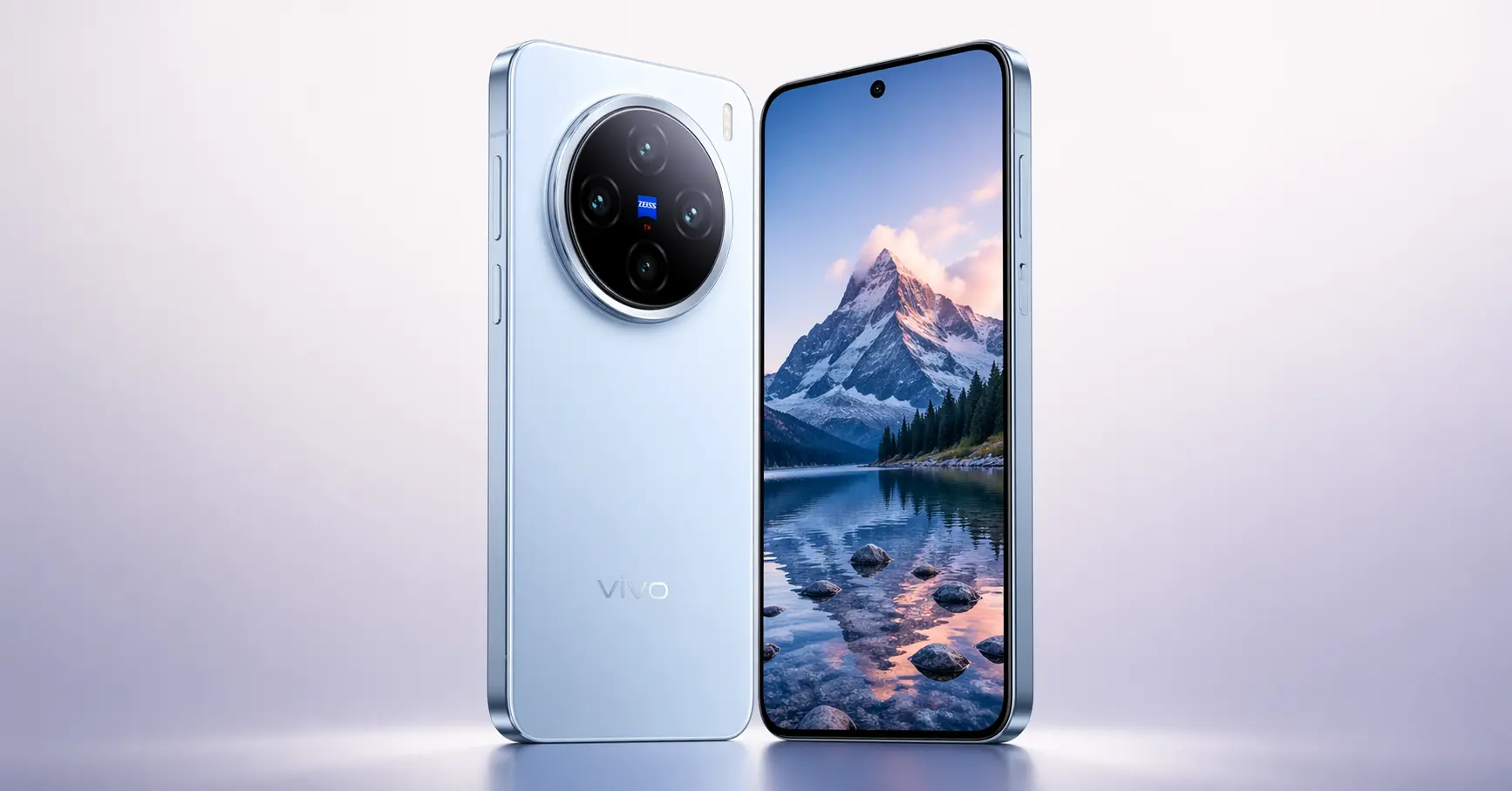
The vivo X300 feels genuinely premium the moment you pick it up. At 190 grams it strikes a rare balance between substance and comfort. The metal frame gives it real heft and contributes to a build quality that feels expensive and well-assembled.
Vivo flattened the frames and the back panel giving the X300 a clean and modern look that PhoneArena compared to the feel of an iPhone 16 in hand. The matte glass back has a fine grain texture that looks sophisticated. It does feel slightly slippery with dry hands so the colour-matched case included in the box is worth using.
The circular Zeiss camera module sits prominently on the back. It is large and it will poke at your index finger until you adjust your grip but the phone’s excellent balance means that adjustment feels natural and quick. Importantly the camera module ring blends neatly into the back panel rather than sitting proud above it which means less lint collection and a cleaner look overall.
Button placement is excellent. The volume rockers and power button sit in positions that one-handed users will appreciate. The bottom edge includes the USB-C port and SIM tray while the top houses the IR blaster. Beebom reviewers called it the best-feeling phone of 2025 and it is easy to understand why.
The IP68 and IP69 dual water resistance rating gives you genuine peace of mind in rain and near water. This dual rating is relatively uncommon at this price point and it is a meaningful real-world differentiator.
Display Quality: Stunning in Every Condition
The vivo X300 display delivers a flagship experience from the moment you power it on. The 6.31 inch 1.5K AMOLED panel produces sharp crisp visuals at 460 pixels per inch with rich colours and deep blacks that AMOLED technology enables naturally.
Peak brightness reaches 4500 nits which makes the display genuinely readable in direct sunlight. Reviewers testing the phone outdoors in strong light consistently noted that they did not need to squint or shield the screen at maximum brightness. That outdoor visibility is one of the X300’s strongest real-world advantages over competitors in the same price bracket.
The 120Hz adaptive refresh rate keeps everything smooth whether you are scrolling through social media browsing long articles or playing games. The LTPS panel adjusts automatically between lower refresh rates for static content and full 120Hz for fast-moving content which helps the battery last longer without sacrificing the smooth feel.
Colour accuracy benefits from Zeiss natural colour calibration which tones down the tendency toward oversaturation common in many Android displays. The result is colours that look punchy and vibrant without feeling artificial or processed. Content consumption on this screen whether streaming video or browsing photos is a genuinely enjoyable experience.
One practical note: the default resolution ships at FHD+ rather than the full 1.5K. You need to switch this manually in Display Settings. The difference is noticeable especially in text sharpness so it is worth making that change on day one.
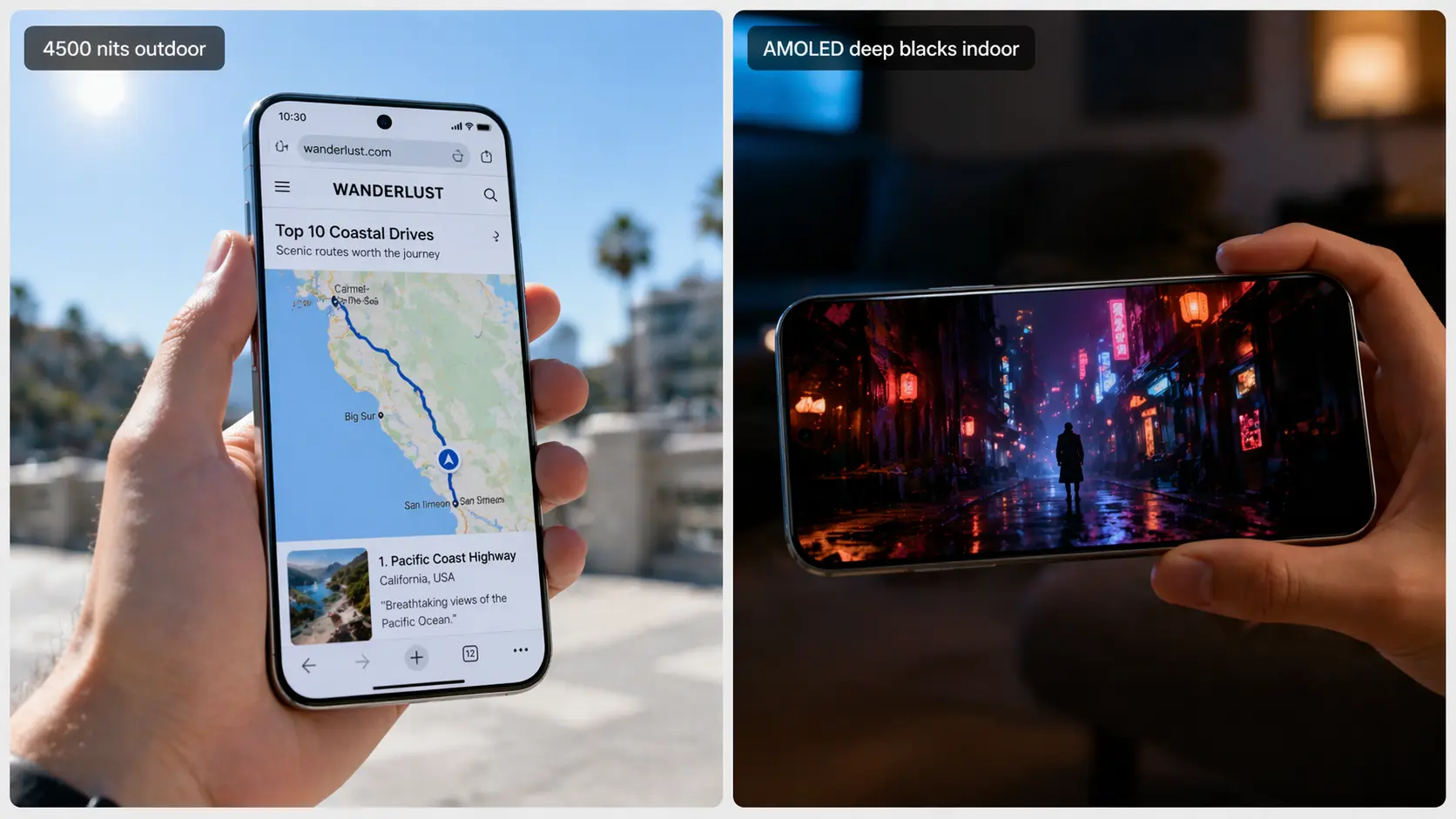
making it clearly readable in direct sunlight while
delivering deep AMOLED blacks for an excellent indoor
and nighttime viewing experience.
Performance: Dimensity 9500 Delivers True Flagship Power
The vivo X300 runs on the MediaTek Dimensity 9500 built on a 3nm architecture. This chip is a genuine flagship processor that erases the performance gap between MediaTek and Qualcomm that existed in earlier generations. Every reviewer who tested the X300 confirmed that the chip handles anything you throw at it without hesitation.
App opening is instant. Multitasking between demanding apps feels effortless. The keyboard never lags. Transitions and animations throughout OriginOS 6 feel snappy and responsive. Reviewers who came to the X300 from iPhones noted that the Android experience here matches iOS in responsiveness which is a significant compliment.
Gaming Performance
The X300 handles intensive mobile gaming with impressive composure. Genshin Impact at maximum graphics settings runs smoothly. Extended gaming sessions do produce warmth around the camera module area but the phone never throttled noticeably or dropped frames significantly during testing. The enlarged vapor chamber inside manages heat more effectively than earlier Vivo flagships.
Notebookcheck flagged that the compact body does create a slightly higher potential for thermal throttling under sustained extreme loads compared to larger phones with more surface area for heat dissipation. For casual to heavy gaming this is not a real-world concern. For sustained professional rendering or benchmark running over extended periods you may see some throttling.
RAM and Storage Performance
The 12GB base RAM with LPDDR5X technology handles extensive multitasking confidently. Apps stay loaded in memory for extended periods before needing to reload. The 16GB option gives you additional headroom that future-proofs the phone for more demanding apps and games over its lifespan. UFS 4.1 storage delivers fast app loading and file transfer speeds that you notice in everyday use.
Vivo X300 Camera Review: 200MP Zeiss System That Punches Above Its Price
The camera system is the heart of the vivo X300 review story and it delivers genuinely impressive results across all three lenses. Vivo built the X300 camera around the same Zeiss partnership that powers its Pro models and the difference shows.
Main 200MP Camera
The 200MP OIS HP5 main sensor with a 1/1.4 inch format is the headline camera. Unlike many phones that bury their highest-resolution sensor in the telephoto position the X300 puts this powerhouse at the primary shooting position. That means your default shots benefit from the largest sensor on the phone.
In good light the main camera captures images that are sharp detailed and vibrant with punchy colours and excellent contrast. The shutter responds almost instantaneously and moving subjects come out crisp rather than blurred. The 50MP high-resolution mode delivers outstanding results for scenes where you want maximum detail for cropping later.
Low-light photography is a particular strength. The large 1/1.4 inch sensor pulls in substantial light naturally which means Night Mode activates less aggressively and produces more natural-looking results. Shadows retain information highlights avoid blowout and noise stays well controlled even in challenging indoor or evening conditions.
50MP Periscope Telephoto
The 50MP Sony LYT-602 periscope telephoto covers 3x optical zoom with OIS stabilisation and can extend to 100x digital zoom. At 3x the telephoto produces portrait-quality images with natural background separation and excellent subject detail. The Zeiss optics partnership visibly improves edge sharpness and reduces chromatic aberration compared to non-Zeiss Android telephoto systems.
Beyond 10x the digital zoom applies AI enhancement that delivers clean and presentable results even if the finest detail cannot match optical zoom quality. The 100x zoom is more of a practical curiosity than a serious photographic tool but it works surprisingly well for showing distant subjects.
50MP Ultra-Wide Camera
The 50MP ultra-wide delivers consistently excellent wide-angle shots with effective edge distortion correction that keeps architecture and landscapes looking natural rather than barrel-distorted. The 120-degree field of view captures dramatic perspective shots that a main camera simply cannot achieve. Colour consistency between the ultra-wide and the main camera is strong so multi-shot compositions look coherent.
50MP Selfie Camera
The front camera upgrade from previous Vivo models is immediately noticeable. The 50MP JN1 sensor with autofocus produces sharp and natural selfies. Portrait mode delivers convincing background blur with accurate edge detection. Selfie video quality is stable and smooth which makes the X300 a practical tool for content creators who film themselves regularly.
Video Performance
Video quality on the vivo X300 impresses across all lighting conditions. The phone supports 4K 60fps recording on all cameras and introduces 4K 120fps slow-motion capture. The Zeiss natural colour calibration keeps footage from looking oversaturated and LOG video profiles give professional video editors the flexibility they need in post-production. Electronic stabilisation keeps handheld footage steady and usable without the jelly effect that affects some other Android stabilisation systems.
For a deep technical dive into the camera system read the detailed
Notebookcheck vivo X300 camera review
and the real-world photography assessment at
91Mobiles vivo X300 review with sample photos.

sensor delivers exceptional daylight detail while
the 50MP periscope handles portrait zoom with natural
background separation. Night Mode keeps noise
controlled in challenging low-light conditions.
Battery Life and Charging: Built to Last the Whole Day
The vivo X300 battery capacity sits at 6040mAh which is a substantial reserve for a phone this compact and light. That capacity combined with the efficiency improvements in the Dimensity 9500 chip delivers real-world battery life that consistently impresses reviewers who tested the phone across multiple usage profiles.
In everyday mixed usage the X300 comfortably lasts a full day. Browsing messaging photography and some gaming through the day leaves meaningful charge remaining by bedtime for most users. Screen-on-time measurements from Beebom testing reached around seven hours of active usage which places the X300 well above the average for its form factor.
Heavy users who push the phone with sustained gaming 4K video recording and constant connectivity should expect the battery to run down faster but still reach the end of an active day. The X300 is not the phone that will make you charge mid-afternoon unless you are using it for professional-grade video production or intensive benchmarking.
Charging Speeds
90W wired fast charging is one of the X300’s most practical daily-use advantages. Beebom testing confirmed the phone reaches 50 percent from empty in under 20 minutes and achieves a full charge in approximately 40 minutes. That speed means a short breakfast or lunch break is enough to top up from nearly empty to full.
40W wireless charging support is also included which is notable at this phone’s compact size. Most phones this light and thin compromise on wireless charging speeds but the X300 delivers genuinely useful wireless charging that is fast enough for desk charging through a working day without cable management frustration.
A charger is included in the box in most markets which is increasingly rare among flagship smartphones and worth appreciating.
OriginOS 6 Software and Update Support
The vivo X300 ships with Android 16 and OriginOS 6 which represents a significant improvement over the FuntouchOS that powered earlier Vivo global flagships. OriginOS 6 is cleaner faster and more polished than its predecessor and it brings a visual design language that reviewers have described as iOS-inspired without feeling like a direct copy.
The gesture navigation system is fluid and intuitive. The notification shade and quick settings panel feel modern and well-organised. Animations throughout the UI are smooth and the overall software experience keeps pace with what the Dimensity 9500 chip can deliver rather than holding it back.
Some reviewers noted that certain OriginOS UI decisions feel unfamiliar if you are coming from Samsung’s One UI or stock Android. The customisation system takes some time to explore and configure to personal preference. But the underlying speed and reliability of the software platform are genuinely good.
Vivo commits to 5 major Android OS updates and 7 years of security patches which is a strong software support promise that approaches Samsung’s commitment and exceeds what most Android manufacturers offer. For users who keep phones for four or more years this support window makes the X300 a responsible long-term investment.
Vivo X300 vs X300 Pro: Which One Should You Choose
The most common question for anyone considering the vivo X300 is how it compares to its larger sibling the X300 Pro. Both phones share the same Dimensity 9500 chip and the same Zeiss camera partnership but several meaningful differences separate them.
The X300 Pro carries a larger 6.78 inch LTPO AMOLED display with a higher resolution of 2800 x 1260 pixels and a bigger 6510mAh battery. Its telephoto camera prioritises the 200MP sensor in the periscope position at 3.5x optical zoom compared to the X300’s 50MP periscope at 3x. The Pro also adds 40W wireless charging and USB 3.2 for faster data transfer.
The X300 brings its own unique advantage by placing the 200MP sensor as the main wide-angle camera rather than the telephoto. This means every default shot benefits from the highest-resolution sensor and the largest 1/1.4 inch image sensor on the phone. For photographers who shoot primarily at normal focal lengths this arrangement makes the X300 the better choice.
The X300 is also significantly more compact and lighter at 190 grams versus 226 grams for the Pro. That weight and size difference matters for users who value one-handed usability and extended carrying comfort through a full day. In Europe the X300 costs around €350 less than the X300 Pro which is a substantial saving for what remains a flagship-tier experience.
Choose the X300 if you prioritise compactness value and a primary camera-first setup. Choose the X300 Pro if you need the most powerful telephoto available and a larger display for media consumption and professional work.
PhoneArena provides an excellent direct comparison at
PhoneArena’s vivo X300 review including comparison against the X300 Pro.
Vivo X300 Pros and Cons
What the Vivo X300 Gets Right
- 200MP Zeiss main camera delivers outstanding daylight and low-light photography that rivals phones costing significantly more
- Dimensity 9500 chip provides true flagship performance with no compromise for the compact form factor
- 6040mAh battery comfortably lasts a full day of heavy mixed usage with 90W fast charging providing a full charge in 40 minutes
- 6.31 inch 4500 nit AMOLED display looks stunning indoors and outdoors with natural colour calibration from Zeiss
- IP68 and IP69 dual water resistance provides real-world peace of mind in challenging conditions
- 190 gram weight feels comfortable and balanced in single-hand use where larger flagships become unwieldy
- 7 years of security patches and 5 major Android OS updates make this a strong long-term investment
- Charger included in the box at a time when many flagship phones ship without one
- 40W wireless charging at this compact size and weight is genuinely impressive engineering
What the Vivo X300 Gets Wrong
- Thermal throttling under sustained extreme loads is a real limitation in the compact body compared to larger phones with more surface area
- OriginOS 6 has a learning curve for users coming from Samsung One UI or stock Android and some design decisions feel unfamiliar
- Software rollout pace for updates may lag compared to Google and Samsung which have more established global infrastructure
- Matte glass back feels slippery with completely dry hands though the included case addresses this immediately
- Large circular camera module can interfere with natural grip and takes adjustment to use comfortably one-handed
- Not available in the US through official channels which limits accessibility for American buyers who must import
- 100x digital zoom while functional is heavily AI-processed and cannot replace the optical zoom quality of the Pro model at those distances
Frequently Asked Questions About the Vivo X300
Is the vivo X300 worth buying in 2026?
Yes the vivo X300 is absolutely worth buying for anyone who wants a compact flagship with a premium camera system and all-day battery life. Multiple reviewers called it the most complete compact flagship of 2026. Its 200MP Zeiss camera system the Dimensity 9500 chip and the 6040mAh battery all perform at the top of their respective categories. The seven-year security update commitment adds further long-term value.
What camera does the vivo X300 have?
The vivo X300 features a triple rear camera system backed by Zeiss optics. The main camera uses a 200MP OIS HP5 sensor with a 1/1.4 inch format. The telephoto uses a 50MP Sony LYT-602 periscope lens at 3x optical zoom. The ultra-wide uses a 50MP JN1 sensor with a 120 degree field of view. The front camera is a 50MP JN1 lens with autofocus support.
How long does the vivo X300 battery last?
The vivo X300 delivers approximately seven hours of screen-on-time in mixed everyday usage covering browsing messaging social media and photography. Most users get comfortably through a full day without charging. The 90W fast charger fills the 6040mAh battery from empty to full in approximately 40 minutes making overnight charging optional rather than essential.
What processor does the vivo X300 use?
The vivo X300 uses the MediaTek Dimensity 9500 built on a 3nm architecture. This is the same chipset in the X300 Pro and it delivers top-tier flagship performance. The CPU runs at up to 4.21GHz and the chip handles gaming video production multitasking and AI camera processing without any performance bottlenecks in real-world use.
Does the vivo X300 have water resistance?
Yes the vivo X300 carries both IP68 and IP69 dual water resistance ratings. IP68 certifies survival in up to 1.5 metres of fresh water for 30 minutes. IP69 adds protection against high-pressure hot water jets which is uncommon at this price point and makes the phone genuinely confident in rain wet environments and outdoor activities.
How does the vivo X300 compare to the Samsung Galaxy S25?
The vivo X300 competes directly with the Samsung Galaxy S25 in display and camera performance while offering a larger battery and a higher-resolution main camera sensor. The Galaxy S25 has the advantage of Samsung’s more established global software support and a wider accessory ecosystem. The X300 wins on battery capacity primary camera resolution and value for money in markets where both are available.
CONCLUSION
Vivo X300 Review Verdict: The Best Compact Flagship of 2025
This vivo X300 review reaches a clear conclusion. The X300 is one of the most complete compact flagship smartphones launched in 2025. Vivo packed a genuinely impressive set of specifications into a phone that weighs just 190 grams and feels comfortable in every hand size.
The 200MP Zeiss main camera is the highlight and it delivers on its promise across all lighting conditions. The Dimensity 9500 chip provides performance that will feel fast for years. The 6040mAh battery with 90W charging means range anxiety is not something you think about with this phone. The dual IP68 and IP69 rating gives you real durability that most competitors lack.
The caveats are real but manageable. OriginOS 6 takes adjustment for users from other ecosystems. Thermal performance under sustained extreme loads is limited by the compact body. Software update rollout speed depends on Vivo’s regional infrastructure. And official availability outside Asia and Europe remains limited.
For anyone who values a phone they can use comfortably in one hand without sacrificing flagship camera quality or battery life the vivo X300 is an easy recommendation. It earns its price and then some.
Read the independent full assessment at
Beebom’s complete vivo X300 review
for additional real-world sample photos and performance benchmarks that reinforce every point this review covers.

Prince Anichi
Founder and Lead Technology Editor at Ortechy. Covering digital economy shifts, tech ecosystems across Africa, cybersecurity intelligence, and emerging software platforms.