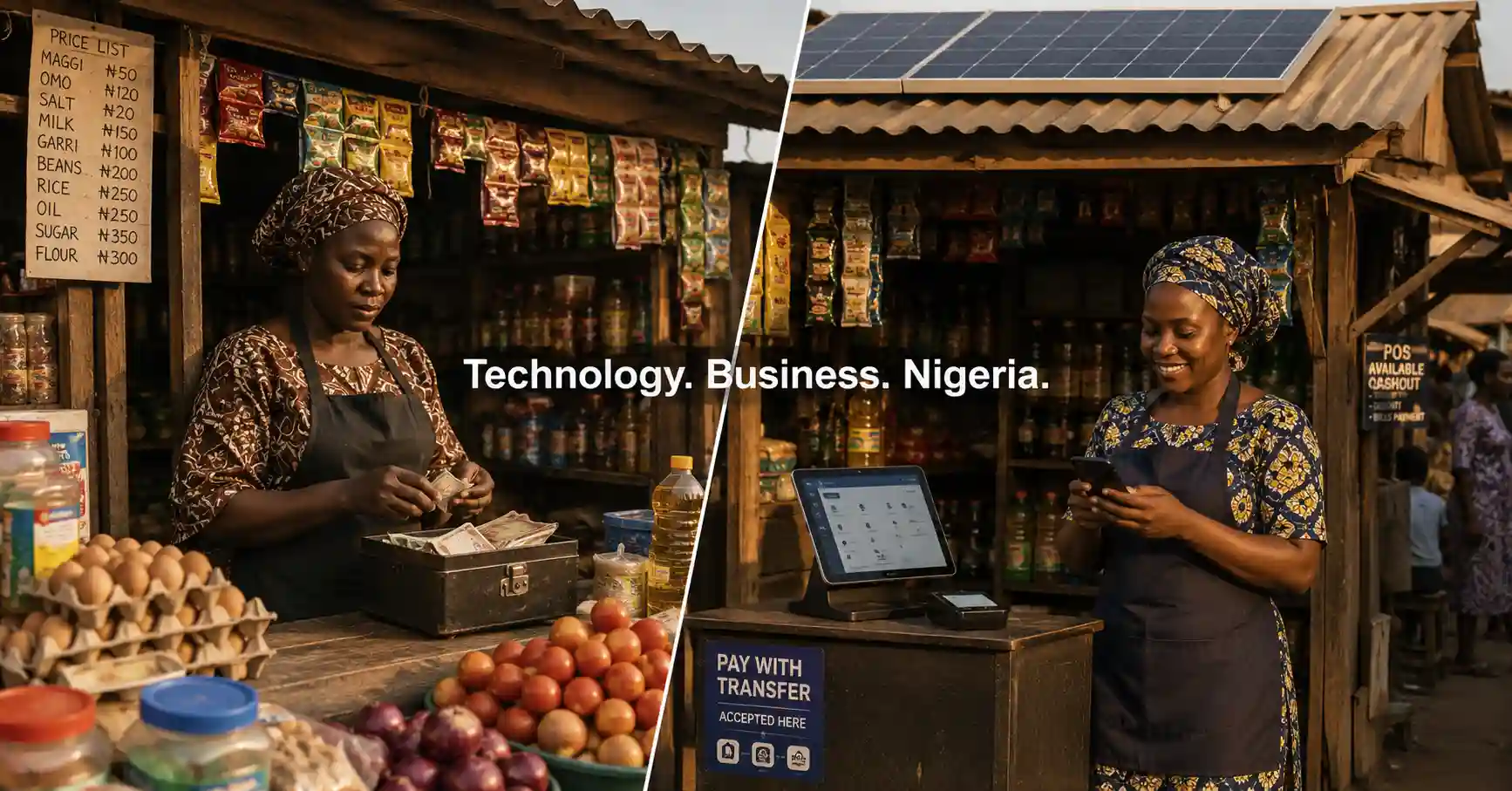
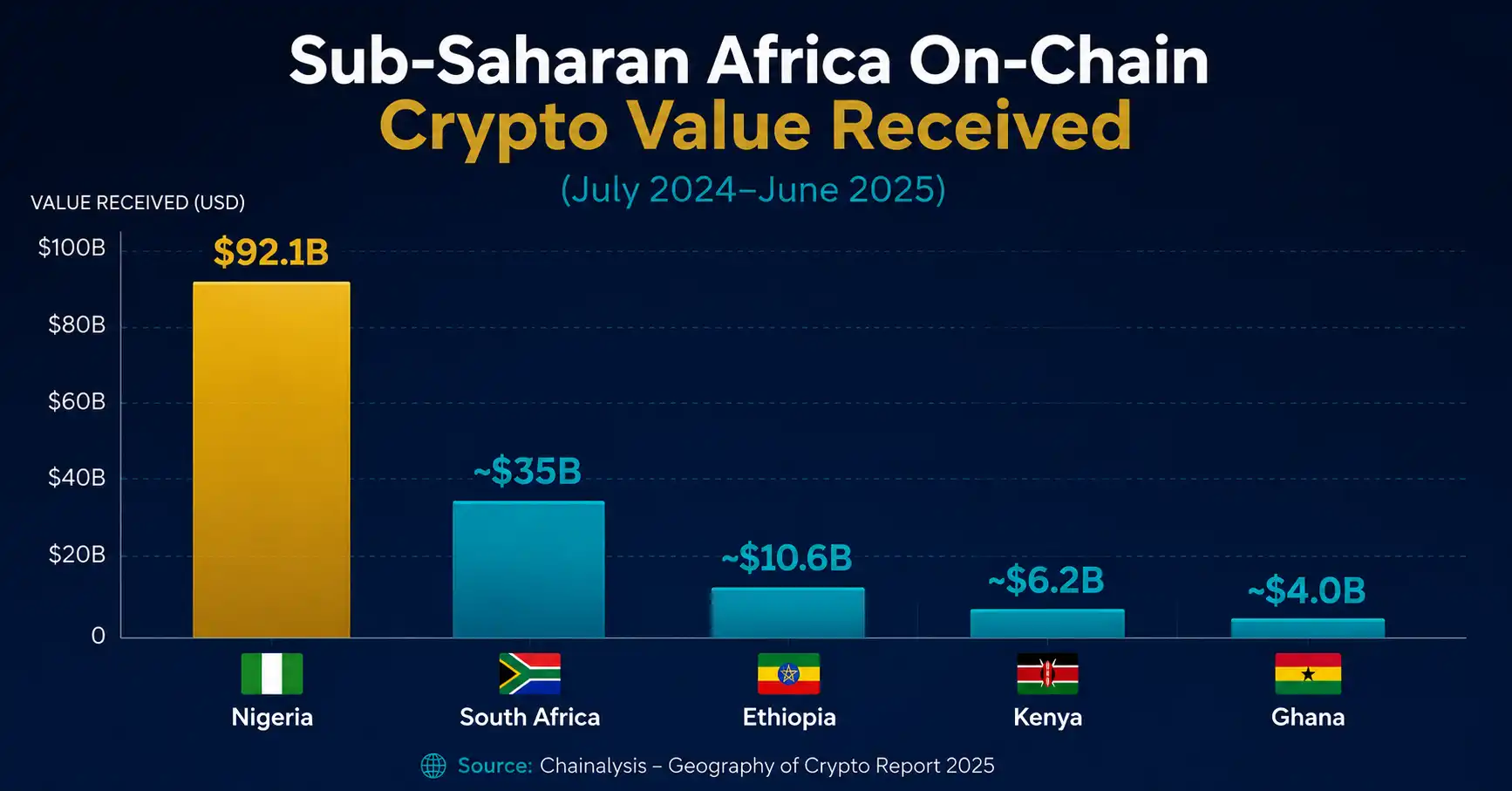
Nigeria alone received 92.1 billion dollars in on-chain crypto value in the year to June 2025, nearly three times as much as South Africa, the next largest market. That single figure explains why Web3 in Africa has become one of the most closely watched stories in global finance. This is not speculation anymore. It is infrastructure.
This post breaks down what Web3 actually means, why it is spreading so fast across the continent, and which countries, companies, and use cases matter most. It also covers the risks, the regulation catching up around it, and where the technology is genuinely changing daily life rather than just headlines.
Because the topic spans finance, technology, and policy, this guide moves section by section. Now, let us start with the basics before getting into the numbers that make Africa’s case unique.
What Is Web3 in Plain English?
Web3 refers to a version of the internet built on blockchain technology, where users hold and control digital assets directly instead of relying on a bank or a big tech platform. A blockchain is simply a shared digital ledger that records transactions across many computers at once. This means no single company or government can quietly alter the record.
Therefore, Web3 covers a wide range of tools. These include cryptocurrencies, stablecoins pegged to real currencies like the US dollar, decentralized finance platforms known as DeFi, and non-fungible tokens or NFTs, which represent ownership of a unique digital or physical item.
In practice, most of Africa’s Web3 activity centers on one category above all others: stablecoins used for everyday payments. That distinction matters, and it is the key to understanding everything else in this post.
Why Web3 in Africa Is Growing Faster Than Almost Anywhere Else
According to Chainalysis’s 2025 Geography of Cryptocurrency Report, Sub-Saharan Africa received over 205 billion dollars in on-chain value between July 2024 and June 2025, a jump of 52 percent year on year. That makes it the third fastest growing crypto region in the world, trailing only Asia-Pacific and Latin America.
However, the scale is still small compared to North America or Europe. What stands out instead is the pattern of use. More than 8 percent of all value transferred in the region involved transactions under 10,000 dollars, a higher share of small, everyday transfers than the global average.
This tells a clear story. Web3 in Africa is driven by necessity, not speculation. People are using it to protect savings, pay suppliers, and send money home, not to chase quick profits on volatile tokens.
The Currency Devaluation Effect
In March 2025, monthly crypto volume in the region spiked to nearly 25 billion dollars, a sharp outlier in a month when most other regions saw declines. Chainalysis linked this surge directly to a sudden devaluation of Nigeria’s naira, which pushed many residents toward digital dollars as their local currency lost value overnight.
This pattern repeats across the continent. When local currencies weaken, crypto adoption tends to rise almost immediately, because people are looking for a way to preserve what they have earned.
Stablecoins: The Real Engine of Web3 in Africa
Stablecoins now account for roughly 43 percent of all crypto transaction volume across Sub-Saharan Africa, according to the Milken Institute’s analysis of the region’s digital asset adoption. These are tokens pegged to stable assets, usually the US dollar, so their value does not swing the way Bitcoin’s does.
This matters because dollar access is genuinely hard to come by in many African economies. Businesses that once secured only 30 percent of the foreign currency they needed through the banking system can now settle international invoices in stablecoins within minutes.
Also, this shift is not theoretical. Nigeria’s central bank estimates stablecoins now make up about 40 percent of the country’s crypto market, led by dollar-pegged tokens like USDT and USDC.
Case Study: How Yellow Card Is Rewiring Corporate Payments
Yellow Card began in 2019 as a Bitcoin-only exchange processing around one million dollars a day. Within four months of adding USDT support, its volume shifted to 99 percent stablecoins, a transformation its founder describes as the moment the business became fundamentally about payments rather than trading.
The company now operates in over 20 African countries and has raised 85 million dollars in venture funding. In June 2025, it announced a partnership with Visa to explore stablecoin settlement across Central and Eastern Europe, the Middle East, and Africa.
One of its clients, a major African food producer, could only access about 30 percent of the dollars it needed through traditional banks to import ingredients from Switzerland and the UK. Using stablecoins closed that gap and kept the company’s supply chain running. This is Web3 in Africa doing quiet, unglamorous work that keeps real businesses open.
Remittances and the True Cost of Sending Money Home
Africa remains the most expensive place in the world to send and receive money. The World Bank’s Remittance Prices Worldwide database put the average cost of sending 200 dollars to Sub-Saharan Africa at 8.78 percent in early 2025, well above the global average of 6.49 percent.
Some corridors are far worse. Sending money from Tanzania to Uganda has cost as much as 33 percent through certain banks, while nine of the thirteen most expensive remittance corridors in the world, those above 20 percent, originate from Sub-Saharan Africa.
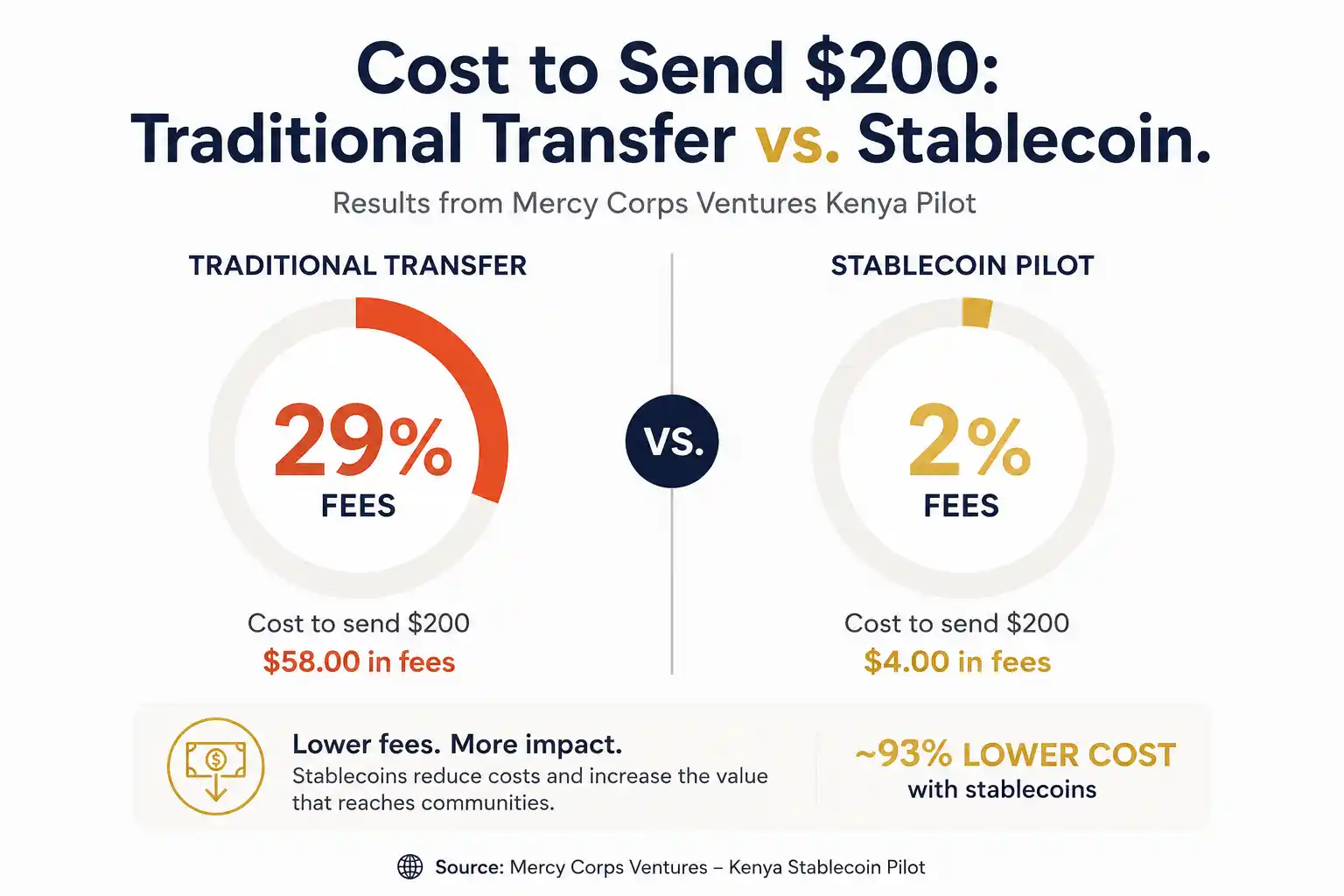
Therefore, stablecoin transfers look genuinely disruptive by comparison. A Mercy Corps Ventures pilot testing small payments to Kenyan freelancers found that switching from traditional transfer methods to stablecoins cut fees from 29 percent down to just 2 percent.
A Personal Note on Cost
Anyone who has tried wiring money to family abroad through a traditional bank knows the frustration of watching a chunk disappear into fees before it even lands. That frustration, multiplied across millions of households, is the real reason stablecoins caught on so quickly. This is not a trend chased for novelty. It is a rational response to a broken system.
Country Spotlight: Nigeria, Kenya, and South Africa
These three countries account for most of the continent’s Web3 activity, but each is following a different path.
- Nigeria received 92.1 billion dollars in crypto value over the year to June 2025, representing 45 percent of the entire region’s volume. Persistent naira depreciation and dollar scarcity make stablecoins a practical necessity rather than a luxury.
- Kenya benefits from its head start in mobile money through Safaricom’s M-Pesa. This existing digital payments culture makes it easier for residents to layer crypto wallets on top of habits they already have.
- South Africa leads in regulatory maturity, with hundreds of licensed virtual asset service providers. This has attracted more institutional trading and arbitrage activity than anywhere else on the continent.
Meanwhile, Ethiopia, Kenya, and Ghana round out the regional top five, with Ethiopia’s rapid rise making it one of the fastest emerging digital asset markets in East Africa.
Regulation: From Grey Areas to Legal Frameworks
Regulatory clarity is finally catching up with usage. As reported by Blockonomi’s coverage of Africa’s expanding crypto rulebooks, South Africa, Nigeria, Kenya, and Mauritius now all operate under formal digital asset regulatory frameworks.
Nigeria’s Securities and Exchange Commission formally recognized digital assets as securities under the Investment and Securities Act of 2025. Kenya signed its Virtual Asset Service Providers Bill into law in October 2025, splitting oversight between its central bank and capital markets authority.
This means the era of total regulatory silence is ending. Founders and investors now have clearer rules to build against, even if enforcement gaps remain in several markets.
Nigeria’s Web3 Funding Surge
The regulatory shift is already showing up in investment numbers. According to Forbes Africa’s reporting on a Hashed Emergent research report, Nigerian Web3 startups pulled in 43 million dollars in 2025, more than double the previous year. Finance-focused startups building stablecoin infrastructure captured 89 percent of that funding.
Nigeria also now accounts for 4 percent of all global Web3 developers, the highest share from any African nation, with developer growth accelerating 36 percent year over year.
The Risks and Limits of Web3 Adoption in Africa
Web3 is not a cure-all, and it carries real risks alongside its benefits. Understanding these limits matters just as much as understanding the growth.
- Infrastructure gaps. Rural areas still face unreliable electricity and low internet penetration, which limits who can actually participate.
- Scam exposure. Rising awareness of crypto has also brought a rise in fraud and Ponzi-style schemes targeting first-time users.
- Volatility outside stablecoins. Bitcoin and other non-pegged tokens remain risky stores of value for households with little financial cushion.
- Talent shortages. A large share of African blockchain developers have never worked with international teams, limiting knowledge transfer and pay parity.
Also worth noting, government-issued digital currencies have struggled where private stablecoins have thrived. Nigeria’s eNaira, launched in 2021 as Africa’s first central bank digital currency, saw roughly 98 percent of its wallets sit inactive by 2023, according to IMF data. Trust in a dollar-pegged token from a private company has, in practice, outpaced trust in a state-issued digital currency.
What Web3 Means for Africa’s Economic Future
The direction of travel looks difficult to reverse. Africa already generates 70 percent of the world’s mobile money market by value, a foundation of digital financial habits that Web3 tools are now building on rather than replacing.
Because of this, expect stablecoins to keep expanding into trade finance, payroll, and supply chain payments over the next few years, not just personal remittances. Companies like Yellow Card and Flutterwave are already pointing their infrastructure in that direction.
This also raises harder questions for policymakers about monetary sovereignty, since dollar-pegged stablecoins effectively let households and businesses opt out of local currency risk. That tension between financial inclusion and monetary control will likely define the next phase of Web3 regulation across the continent.
Why I Believe Africa Is Writing Its Own Web3 Story
Web3 in Africa did not arrive as an import of Silicon Valley trends. It grew out of specific, painful problems: currency devaluation, expensive remittances, and limited dollar access. That context explains why stablecoins, not speculative tokens, dominate the continent’s usage.
The numbers back this up clearly. A 52 percent surge in on-chain value, a 92.1 billion dollar market in Nigeria alone, and remittance fees cut from 29 percent to 2 percent through pilot stablecoin corridors all point to the same conclusion. This is utility-driven adoption, and it is proving remarkably resilient.
Regulation is catching up, funding is accelerating, and a new generation of developers is building the infrastructure locally rather than importing it. Africa is not simply adopting Web3. It is shaping what practical, necessity-driven Web3 adoption looks like for the rest of the world.
Anyone tracking global fintech should be watching this region closely over the next few years, because the lessons emerging from Lagos, Nairobi, and Johannesburg are likely to shape how stablecoins get used everywhere else too.
Frequently Asked Questions
Is Web3 the same thing as cryptocurrency?
No. Cryptocurrency is one part of Web3. Web3 also includes decentralized apps, NFTs, and blockchain-based identity and ownership systems that do not always involve trading currency.
Why are stablecoins more popular than Bitcoin in Africa?
Stablecoins hold a steady value because they are pegged to currencies like the US dollar. This makes them far more useful for everyday payments and savings than Bitcoin, which can swing sharply in price.
Which African country leads in Web3 adoption?
Nigeria leads by a wide margin, receiving over 92 billion dollars in on-chain crypto value in the year to June 2025, roughly three times the volume of South Africa, the second largest market.
Is crypto legal in Africa?
It depends on the country. South Africa, Nigeria, Kenya, and Mauritius now have formal regulatory frameworks, while other countries still operate in legal grey areas or have outright restrictions.
How does Web3 help with remittances?
Stablecoin transfers can cut remittance fees dramatically compared to traditional banks, in some pilot programs from around 29 percent down to about 2 percent, because they skip layers of intermediary banks and currency conversion fees.
What is the biggest risk of Web3 adoption in Africa?
Scams and fraud targeting inexperienced users remain a serious risk, alongside infrastructure gaps like unreliable electricity and low internet access in rural regions.

Prince Anichi
Founder and Lead Technology Editor at Ortechy. Covering digital economy shifts, tech ecosystems across Africa, cybersecurity intelligence, and emerging software platforms.