A university student in Lagos can now open a laptop and use the same AI model that a student in London or Toronto pays twenty dollars a month for. That is not a marketing claim. It is the reality created by a wave of free education partnerships that reached the continent in late 2025 and early 2026. This guide covers the best free AI tools for students in Africa right now, tested against the realities of shared data bundles, unreliable power, and tight budgets.
Because access matters as much as capability, this list does not simply rank tools by raw model power. It weighs cost, data usage, offline resilience, and how each tool fits a typical semester. You will find writing assistants, research companions, tutoring bots, and presentation builders, all of them free to start.
Now, before diving into individual apps, it helps to understand why 2026 is genuinely different from previous years for students on the continent. Here is what is driving that shift, and then the tools worth installing today.
Why 2026 Is the Turning Point for Free AI Tools for Students in Africa
Therefore, the biggest story of the year is not a new chatbot. It is access. Google now offers a fully free, twelve-month Google AI Pro Plan to eligible university students aged 18 and older in Ghana, Kenya, Nigeria, Rwanda, South Africa, and Zimbabwe, as confirmed by Google’s official Africa newsroom announcement.
This means a student who could never justify a subscription now gets a premium research assistant, a document organiser, and cloud storage bundled together at no cost. Additionally, the offer extends the same terms Google already rolled out across Europe and the Middle East, treating African students as a first-tier market rather than an afterthought.
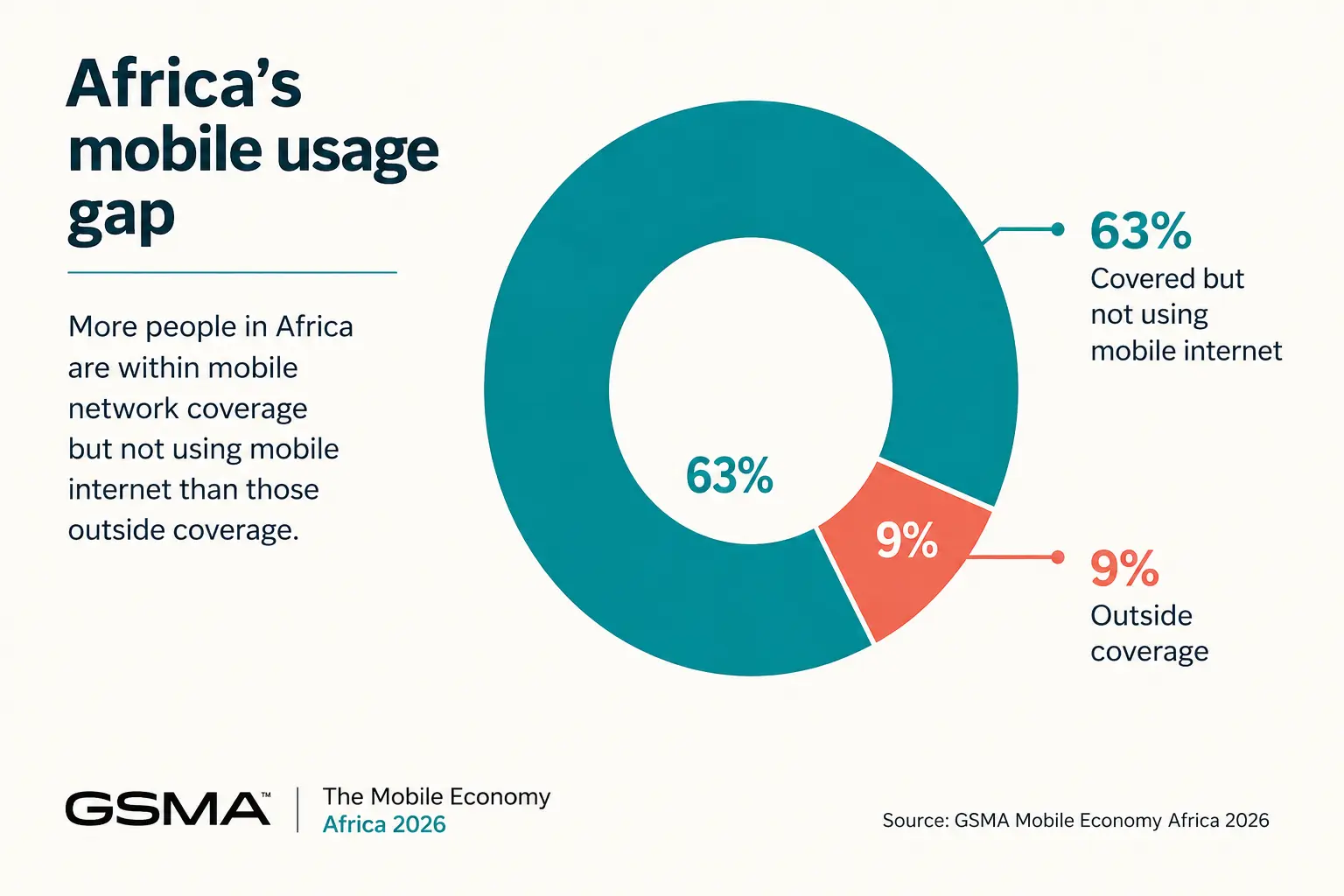
However, free software still needs a connection, and that is where the continent’s other big story comes in. Almost 1 billion Africans live inside mobile network coverage but do not use the mobile internet, largely because of cost, according to the GSMA’s Mobile Economy Africa 2026 report. This usage gap shapes every recommendation below, because a tool that demands constant high-speed access is not truly free for most students.
Google Gemini: The Standout Free AI Tool for Students in Africa
Now for the tool actually leading this shift. Gemini is the anchor of Google’s student offer, and it is arguably the single best free AI tool for students in Africa this year because of what it bundles rather than any one feature.
The twelve-month plan includes expanded access to Gemini’s most capable model for homework help and writing support, a Deep Research mode that compiles findings from many sites into one report, and 2 terabytes of storage across Drive, Photos, and Gmail. Students sign up with a valid university email, and verification typically takes under a minute.
In practice, this matters most for research-heavy courses. A final-year student writing a literature review can ask Gemini to pull together sources, then refine the argument inside Google Docs without leaving the browser tab. That single workflow used to require three separate paid tools.
Who Should Use Gemini First
- Students already living inside Gmail, Docs, and Drive for coursework
- Anyone eligible for the free twelve-month Pro plan in the six listed countries
- Students who need a research assistant for essays, theses, and literature reviews
ChatGPT: The Generalist Every Student Should Have
Meanwhile, ChatGPT remains the tool most students reach for first, and for good reason. It explains difficult concepts in plain language, drafts essay outlines, and walks through maths problems step by step rather than just handing over an answer.
The free plan gives users roughly 10 messages every 5 hours on the standard model before switching to a lighter fallback version, as detailed on OpenAI’s official ChatGPT pricing page. That is a real constraint during a heavy study week, so the smart move is saving ChatGPT for explanation-heavy tasks and routing quick lookups elsewhere.
Because the free tier does not include Deep Research or unlimited file uploads, it works best as a study partner rather than a full research engine. Ask it to quiz you before an exam or turn a messy paragraph into a clear one, and it earns its place in your toolkit.
NotebookLM: Turning Lecture Notes Into a Personal Tutor
This means one of the quiet standouts of 2026 is not a chatbot at all. NotebookLM lets a student upload lecture slides, PDFs, and scanned readings, then ask direct questions grounded only in those documents.
The result is a study tool that will not invent facts outside your syllabus, which matters enormously for exam preparation. Ask it to summarise chapter four or explain a theory in simple terms, and it answers using your own course material as the source.
Also, NotebookLM now generates short audio overviews of a document set, which is genuinely useful for students who want to review content while walking to lectures or during a long commute on limited data. It comes included in the free Google AI Pro Plan for eligible African students, and it also has a usable free tier on its own for everyone else.
Microsoft Copilot: Free AI Inside Word, Excel, and PowerPoint
Because so much coursework still lives inside Microsoft Office, Copilot deserves a place on this list. The free version, available through the Copilot app and bing.com/chat, requires no account and offers real-time web search with no subscription attached.
This free tier typically allows around 30 messages per conversation, according to a detailed breakdown from Data Studios’ Microsoft Copilot access guide. Some universities also enable Copilot Chat at no extra cost for students signed into an eligible Microsoft 365 Education tenant, though this depends entirely on whether the institution’s IT team has switched it on.
The result is a genuinely useful tool for students who draft assignment reports in Word, build budgets in Excel, or need a fast slide deck for a group presentation. Check with your university’s IT office first, since many African institutions already hold a Microsoft education licence that quietly includes this feature.
Quick Setup Checklist
- Visit bing.com/chat or download the Copilot app for instant, no-account access
- Ask your university IT office whether Copilot Chat is enabled on your school account
- Use it inside Word and PowerPoint for drafting and slide generation
Grammarly and Canva: Polishing Writing and Presentations
Additionally, two supporting tools consistently show up in student workflows across the continent. Grammarly’s free tier catches grammar mistakes, but its deeper value is improving clarity and sentence flow in assignments, project reports, and scholarship applications.
Similarly, Canva’s built-in AI features generate slide outlines and improve structure automatically, which cuts the hours students usually lose formatting a presentation the night before a seminar. This kind of tool matters more than it sounds, since first impressions in group presentations often shape how a lecturer grades the whole team.
Together, these two apps handle the polish stage of academic work. Use Gemini or ChatGPT to think and draft, then finish with Grammarly and Canva to present the work professionally.
Perplexity and Claude: Research and Long-Document Writing
For research-heavy assignments, Perplexity’s free academic mode returns cited sources rather than a single unverified answer, which saves the extra step of manually checking claims. This is particularly valuable for students who need defensible references for a term paper.
Then, once you know what you want to say, Claude handles the writing itself. Its free tier manages long documents well, so a student can paste an entire draft and receive genuine line-level feedback rather than a vague compliment.
The combination works because each tool does one job properly instead of trying to do everything. Research first, draft second, and let each free tool specialise in its strongest task.
Khan Academy: Free Core Learning, With One Important Caveat
Khan Academy’s full library of maths, science, and test-prep lessons remains 100 percent free for every learner worldwide, with no ads and no hidden fees, according to Khan Academy’s official pricing page. This alone makes it one of the most reliable free study resources on this list.
However, Khanmigo, the platform’s AI tutor, currently requires a United States billing address for individual subscribers, so it is not directly purchasable by most students on the continent right now. This means African students get the full free content library, but not yet the conversational AI layer on top of it.
The honest takeaway is to treat Khan Academy as your free structured curriculum, then pair it with Gemini or ChatGPT for the interactive tutoring Khanmigo would otherwise provide.
The Real Barrier: Data Costs and Device Affordability
Because none of these tools matter without a connection, affordability deserves its own section. Handset and data costs remain the single largest barrier to mobile internet adoption across the continent, ahead of digital skills gaps and awareness, based on GSMA’s Handset Affordability Coalition report.
In response, the GSMA and a coalition of manufacturers identified six countries, the Democratic Republic of Congo, Ethiopia, Nigeria, Rwanda, Tanzania, and Uganda, for pilots of affordable 4G smartphones priced near 40 US dollars. That single change could bring tens of millions of previously offline students within reach of tools like Gemini and ChatGPT for the first time.
In the meantime, practical steps help. Favour text-based tools like ChatGPT and Claude over video-heavy features when data is tight, download NotebookLM’s audio overviews on campus Wi-Fi before a long trip home, and use Grammarly’s browser extension instead of a separate app to save storage on an older phone.
How to Build a Free AI Study Stack in 2026
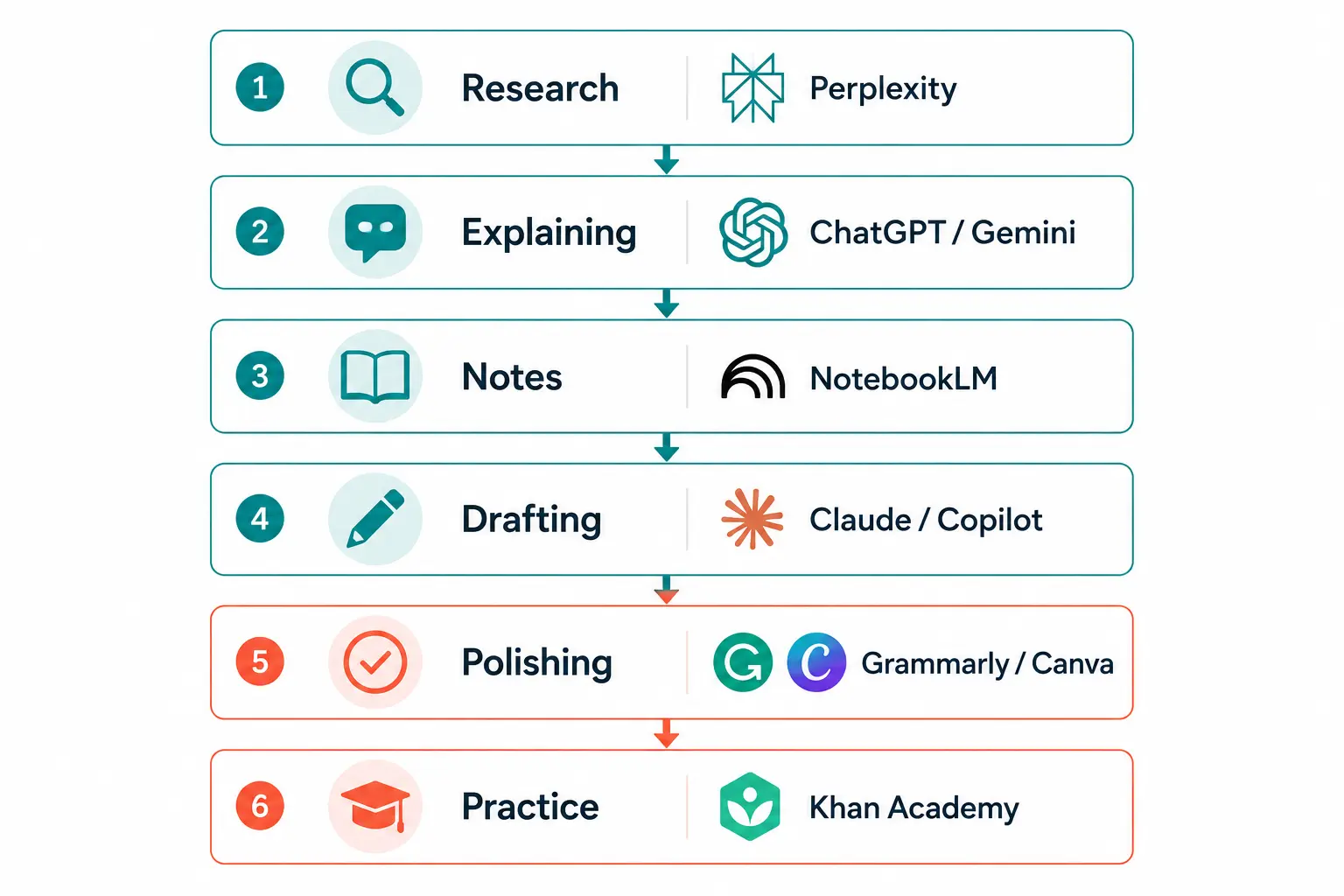
This means the smartest approach is not picking one tool but rotating between a small set, each assigned to the job it does best. Below is a simple stack that costs nothing and covers a full academic workload.
- Research and sourcing: Perplexity’s academic mode or Gemini’s Deep Research for cited, current information
- Explaining hard concepts: ChatGPT or Gemini for step-by-step, plain-language breakdowns
- Working with your own notes: NotebookLM for document-grounded Q&A and audio reviews
- Drafting and editing: Claude or Copilot inside Word for long-form writing and revision
- Polishing the final product: Grammarly for clarity and Canva AI for presentation design
- Structured practice: Khan Academy’s free library for maths, science, and test preparation
Finally, treat AI as a study partner rather than an answer machine. Ask each tool to explain its reasoning, quiz you afterward, and check outputs against your own lecture notes before submitting graded work.
Africa’s Free AI Advantage Is Real, But Access Still Decides Who Benefits
The best free AI tools for students in Africa in 2026 are genuinely competitive with paid plans available anywhere else in the world. Google’s twelve-month Pro Plan, a capable ChatGPT free tier, NotebookLM, Copilot, and a free Khan Academy library together form a study toolkit that would have cost hundreds of dollars a year just two years ago.
That said, capability on paper does not automatically translate into use on the ground. Affordability of data and devices, not the quality of the models, remains the deciding factor in who actually benefits from this wave of free access, exactly as GSMA’s research on the continent’s usage gap shows.
Students who verify their eligibility for Google’s free plan today, pair it with a lean rotation of ChatGPT, NotebookLM, and Grammarly, and stay deliberate about data usage will get more out of this year’s AI tools than most paying users elsewhere. The technology has arrived. The next task is making sure every eligible student actually claims it.
If your university has not yet announced participation in Google’s free student programme, ask your student affairs office directly, since sign-up windows for these regional offers have historically been time-limited. For the most current terms, always check Google’s official Africa announcement page before signing up anywhere else.
Frequently Asked Questions
Is Google’s free AI Pro Plan really free for students in Africa?
Yes. Students aged 18 and older in Ghana, Kenya, Nigeria, Rwanda, South Africa, and Zimbabwe can claim a twelve-month Google AI Pro Plan at no cost using a valid university email. The offer includes Gemini, Deep Research, NotebookLM, and 2 terabytes of storage.
What is the best free AI tool for students with limited data?
Text-based tools like ChatGPT and Claude use far less data than video or image generation features. NotebookLM’s downloadable audio summaries are also useful for offline review once saved on campus Wi-Fi.
Can Nigerian, Kenyan, or South African students use ChatGPT for free?
Yes. ChatGPT’s free tier is available everywhere with no regional restriction, offering roughly 10 messages every 5 hours on the standard model before switching to a lighter fallback version.
Is Khanmigo available for African students?
Not directly. Khanmigo, Khan Academy’s AI tutor, currently requires a United States billing address for individual purchase. However, Khan Academy’s entire core lesson library remains free worldwide, including for students across Africa.
Which free AI tool is best for writing university assignments?
Claude and Copilot both handle long-form drafting and editing well, while Grammarly polishes grammar and clarity afterward. Many students combine ChatGPT for outlining with Grammarly for the final pass.
Do these free AI tools work on basic Android smartphones?
Most, including ChatGPT, Gemini, and Copilot, run in a mobile browser without needing a high-end device. Performance depends more on internet speed than phone specifications, which is why affordable data access remains the bigger barrier.

Prince Anichi
Founder and Lead Technology Editor at Ortechy. Covering digital economy shifts, tech ecosystems across Africa, cybersecurity intelligence, and emerging software platforms.