In this article21 sections
- 01.Why Cyber Threats Keep Growing More Dangerous
- 02.Core Cyber Threat Defense Strategies Every Company Needs
- ↳Network Segmentation and Firewalls
- ↳Endpoint Protection and Patch Management
- ↳Multi-Factor Authentication
- 03.Zero Trust Architecture Becomes the New Security Standard
- 04.How AI Is Changing Cyber Threat Defense Strategies
- 05.The Human Element: Training Employees to Spot Threats
- 06.Building an Incident Response Plan That Works
- ↳Steps in a Strong Response Plan
- 07.Ransomware Defense: What the Latest Data Shows
- 08.Managing Third-Party and Supply Chain Risk
- ↳Practical Steps for Vendor Risk
- 09.Frequently Asked Questions
- ↳What is the biggest cyber threat facing companies today?
- ↳How much does a data breach cost on average?
- ↳What is zero trust security in simple terms?
- ↳Can AI really stop cyberattacks?
- ↳Should companies pay ransomware demands?
- ↳How often should employees receive security training?
- 10.My Final Take on Cyber Threat Defense Strategies for 2026
Cyber Threat Defense Strategies Companies Use to Stay Safe
In 2025, the global average cost of a data breach dropped to $4.44 million, the first decline in five years, according to IBM’s 2025 Cost of a Data Breach Report. This drop did not happen by accident. Companies that invested in stronger cyber threat defense strategies saw faster detection, shorter breach timelines, and lower costs.
This guide breaks down the cyber threat defense strategies that actually work right now. You will learn how zero trust security, artificial intelligence (AI), employee training, and incident response planning fit together into one system. Each section pulls real numbers from trusted sources like IBM, Verizon, and the Cybersecurity and Infrastructure Security Agency (CISA).
Now, let’s look at why cyber threats keep growing more dangerous, even as companies spend more money fighting them.
Why Cyber Threats Keep Growing More Dangerous
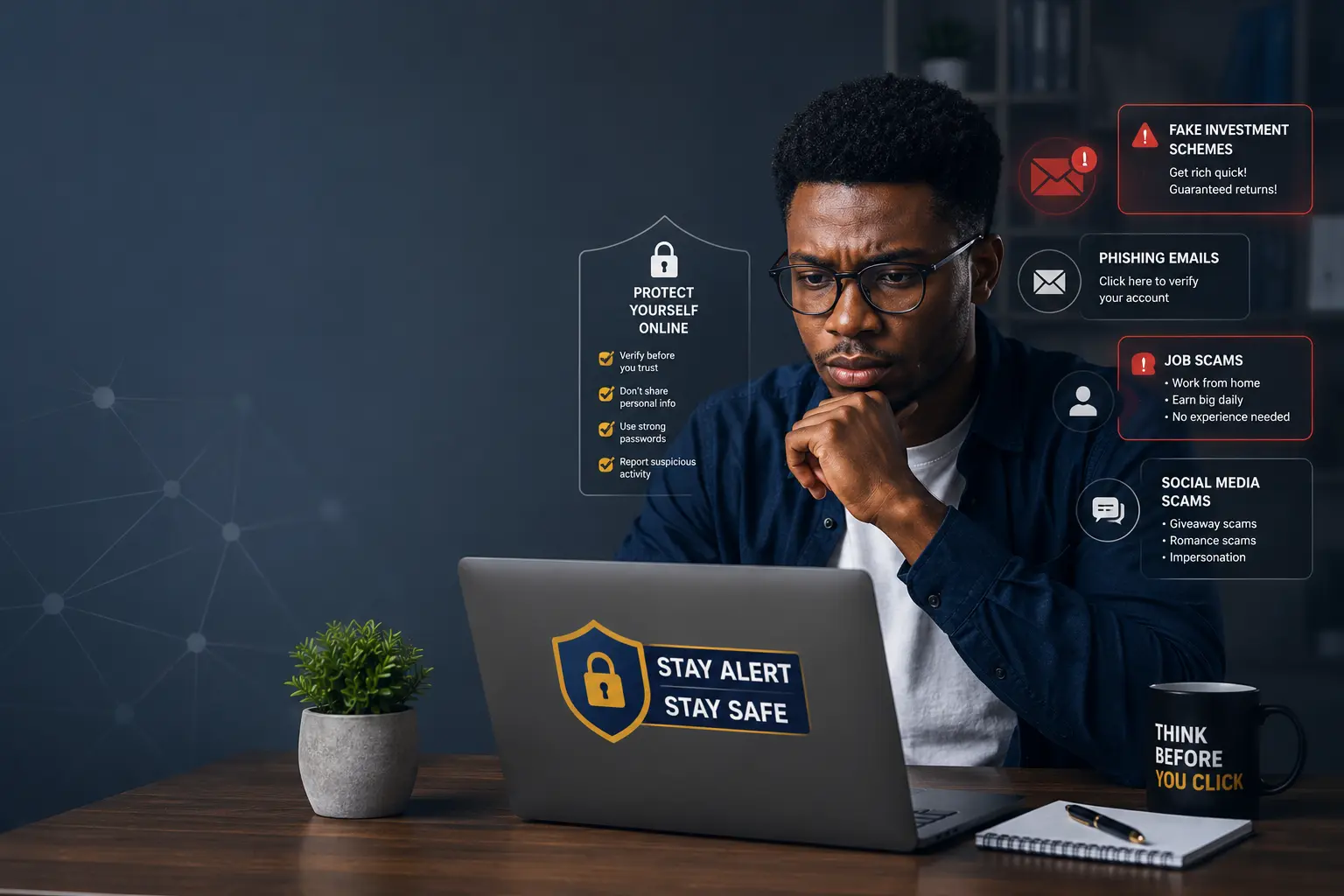
Today, cybercriminals have more tools than ever before. Generative AI helps attackers write convincing phishing emails in seconds, not hours. According to Fortinet’s cybersecurity statistics report, 85 percent of security professionals say generative AI is fueling the rise in attacks.
Also, ransomware keeps climbing fast. Ransomware appeared in 44 percent of breaches in 2025, up sharply from 32 percent the year before, based on Verizon’s latest findings. Because attackers automate so much of their work now, old defenses alone cannot keep up.
This means companies face several threat types at once. The most common include the following.
- Phishing and social engineering emails that trick employees into clicking malicious links
- Ransomware that locks files until a payment is made
- Supply chain attacks that enter through trusted vendors
- Insider threats from employees or contractors with access
- Zero day exploits that target software flaws before a patch exists
Therefore, no single tool can stop all five of these at once. The next section covers the core defenses every company needs as a baseline.
Core Cyber Threat Defense Strategies Every Company Needs
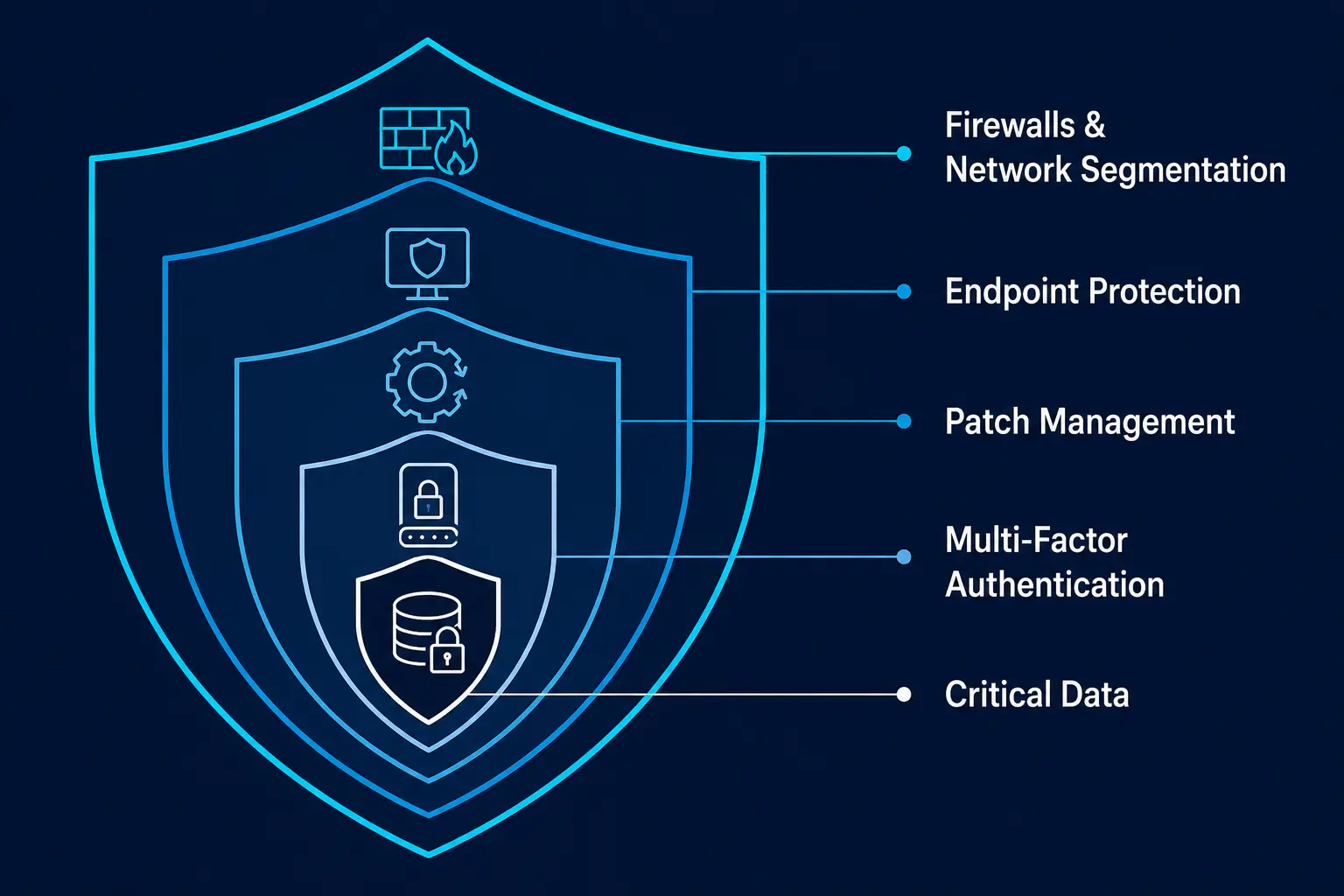
Because attackers use so many entry points, security teams build layered defenses. No single product stops every attack. Instead, companies combine several cyber threat defense strategies into one connected system.
Network Segmentation and Firewalls
First, companies divide their networks into smaller zones. This means that if attackers breach one part, they cannot easily reach everything else. Firewalls, virtual private networks (VPNs), and intrusion detection tools work together to monitor and block suspicious traffic between these zones.
Endpoint Protection and Patch Management
Additionally, every laptop, phone, and server needs its own layer of protection. Endpoint detection tools watch for unusual behavior, such as a file suddenly encrypting thousands of documents. Then, patch management closes known software gaps before attackers can exploit them.
This step matters more than most people realize. Vulnerability exploitation has become one of the fastest growing initial access methods in breaches, overtaking phishing for the second spot in recent data. Quick patching remains one of the simplest and most effective cyber threat defense strategies a company can adopt.
Multi-Factor Authentication
Now, multi-factor authentication (MFA) requires a second proof of identity beyond a password, such as a code sent to a phone. This means stolen passwords alone usually cannot get an attacker into an account. Since stolen credentials remain a leading cause of breaches, MFA closes one of the biggest open doors.
Zero Trust Architecture Becomes the New Security Standard
However, perimeter based security no longer works well. Once employees, contractors, and cloud apps all connect from outside the traditional office network, the old “trust everything inside the firewall” model breaks down.
This is where zero trust comes in. Zero trust means no user or device gets automatic trust, even if it already sits inside the network. Every request gets verified, every time, based on identity, device health, and context.
The Cybersecurity and Infrastructure Security Agency’s Zero Trust Maturity Model gives organizations a roadmap for this shift. It breaks the journey into five pillars: identity, devices, networks, applications, and data.
The result is a security model built around constant verification, not one time trust. Now, let’s look at how AI fits into this picture.
How AI Is Changing Cyber Threat Defense Strategies
Now, AI plays both sides of the cybersecurity battle. Attackers use it to write better phishing emails and find weak spots faster. However, defenders use it to spot threats in seconds rather than days.
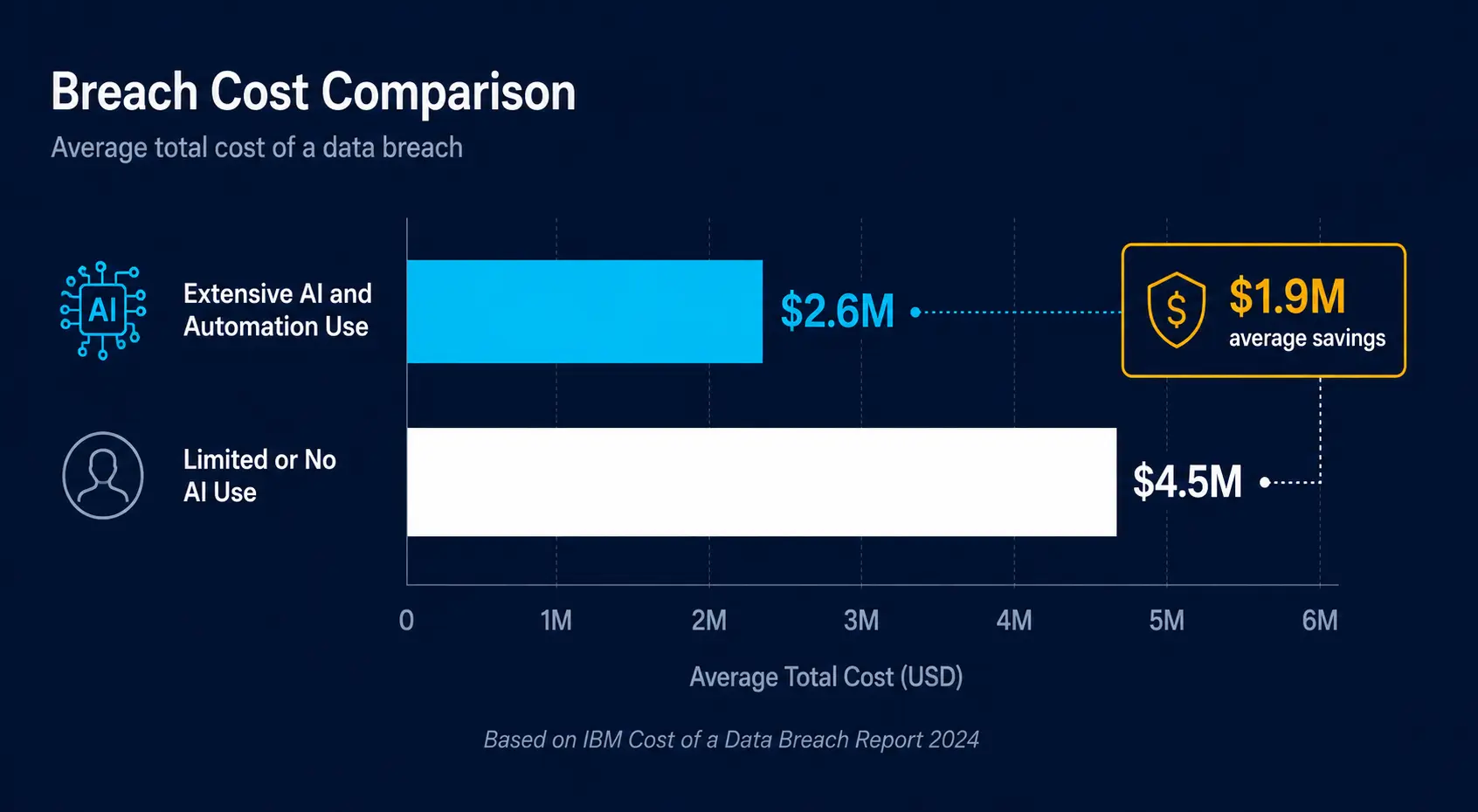
According to IBM’s 2025 report, organizations using AI and automation extensively in their security operations saved an average of $1.9 million per breach compared to those that did not. Companies also contained breaches in a mean time of 241 days, the fastest pace in nine years, largely thanks to AI powered detection.
Because of this, AI driven cyber threat defense strategies now sit at the center of many security budgets. Common AI use cases include the following.
- Scanning network traffic for unusual patterns in real time
- Flagging suspicious emails before they reach an inbox
- Automatically isolating infected devices from the network
- Sorting security alerts so human analysts focus on real threats first
That said, AI adoption also creates new risks. Shadow AI, meaning AI tools employees use without approval, added an extra $670,000 to the average breach cost in organizations affected by it. This means companies must govern AI use just as carefully as they deploy it for defense.
The Human Element: Training Employees to Spot Threats
Despite all this technology, people remain the most common entry point. Stolen credentials and phishing together still account for a large share of breaches each year.
Most breaches still involve some form of human error, misjudgment, or manipulation. This is why security awareness training has become a core part of every defense plan, not an optional extra.
Effective training programs share a few common features.
- Short, regular sessions instead of one long yearly meeting
- Simulated phishing emails that test real responses
- Clear reporting steps so employees know who to contact
- Specific guidance for finance and HR teams, who get targeted most often
Then, companies track results over time. If click rates on simulated phishing emails drop, the training works. If they stay flat, the program needs a new approach.
Building an Incident Response Plan That Works
Even with strong defenses, breaches still happen. This is why every company needs a written incident response plan before an attack occurs, not during one.
A solid plan answers a few key questions in advance. Who gets notified first? Which systems get isolated? Who talks to customers, regulators, and the press?
According to CompTIA’s State of Cybersecurity report, companies that treat cybersecurity as an ongoing operational priority, rather than a one time project, tend to handle incidents with far less disruption.
Healthcare organizations face the costliest breaches of any sector, averaging well above seven million dollars per incident. This makes industry specific response planning especially important for healthcare, finance, and other heavily regulated fields.
Steps in a Strong Response Plan
- Detect and confirm the incident quickly
- Contain affected systems to stop further spread
- Notify the right internal teams and, when required, regulators
- Investigate the root cause thoroughly
- Restore systems from clean backups
- Review and update defenses based on lessons learned
Ransomware Defense: What the Latest Data Shows
Ransomware remains one of the most disruptive threats companies face. As mentioned earlier, it now appears in 44 percent of breaches, a sharp jump from the previous year.
However, there is some encouraging news. The share of victims refusing to pay ransom demands rose to 64 percent, up from 50 percent two years earlier. This shift suggests that backup and recovery strategies are improving across many industries.
The Cybersecurity Ventures 2025 Almanac also notes that ransomware complaints to law enforcement rose 9 percent year over year, with groups like Akira and LockBit among the most active.
Strong ransomware defense usually includes these practices.
- Offline or immutable backups stored separately from the main network
- Regular backup restoration tests, not just backup creation
- Network segmentation to limit how far ransomware can spread
- A clear policy on whether the company will ever negotiate with attackers
Managing Third-Party and Supply Chain Risk
Finally, companies cannot only secure their own systems. Vendors, contractors, and software suppliers often hold the keys to sensitive data too.
Verizon’s 2025 research found that breaches involving third parties doubled compared to the prior year. This means a company’s security is only as strong as its weakest connected vendor.
To manage this risk, many companies now require vendors to meet specific security standards before signing contracts. They also run regular audits and limit how much access any single vendor receives.
Practical Steps for Vendor Risk
- Map out every vendor with access to systems or data
- Require security questionnaires before onboarding new vendors
- Limit vendor access to only what each task requires
- Review vendor security practices on a regular schedule
Frequently Asked Questions
What is the biggest cyber threat facing companies today?
Ransomware and phishing remain the top threats for most companies. Ransomware now appears in 44 percent of breaches, while stolen credentials and phishing continue to drive initial access for attackers.
How much does a data breach cost on average?
The global average cost of a data breach was $4.44 million in 2025. Costs vary widely by industry, with healthcare breaches averaging well above seven million dollars per incident.
What is zero trust security in simple terms?
Zero trust means no user, device, or app gets automatic access just because it sits inside the network. Every request gets checked based on identity, device health, and context, every single time.
Can AI really stop cyberattacks?
AI helps companies detect and contain threats much faster, often cutting response times significantly. However, AI tools also need proper governance, since ungoverned AI use can create new security gaps.
Should companies pay ransomware demands?
Most security experts recommend against paying, since payment does not guarantee data recovery. A growing share of victims, now 64 percent, choose not to pay and instead restore from backups.
How often should employees receive security training?
Short, regular training sessions work better than one long annual session. Many companies now run monthly phishing simulations alongside quarterly refresher training.
My Final Take on Cyber Threat Defense Strategies for 2026
Overall, the data tells a clear story. Companies that combine layered network defenses, zero trust principles, AI powered detection, and strong employee training see lower breach costs and faster recovery times.
However, no single tool or policy works alone. The strongest cyber threat defense strategies treat people, processes, and technology as one connected system, with regular testing and updates.
Therefore, the companies that thrive in 2026 will be the ones that treat cybersecurity as an ongoing practice rather than a box to check once a year. Reviewing your defenses against the steps in this guide is a strong place to start.
For deeper data on breach trends, the full IBM Cost of a Data Breach Report and the Verizon Data Breach Investigations Report both offer detailed breakdowns worth bookmarking.

Prince Anichi
Founder and Lead Technology Editor at Ortechy. Covering digital economy shifts, tech ecosystems across Africa, cybersecurity intelligence, and emerging software platforms.