In this article11 sections
- 01.What is a SIM swap?
- 02.Why criminals want your number
- 03.How the scam works (step by step)
- 04.Warning signs to watch for
- 05.What to do immediately if it happens
- 06.How to protect yourself today
- 07.Frequently Asked Questions
- ↳Can someone do a SIM swap without my phone?
- ↳Will my bank refund money lost to SIM swap fraud?
- ↳Is eSIM safer?
- ↳How long does a fake SIM swap take to drain an account?
Imagine your phone suddenly shows "No Service". You think it is just a network problem. Minutes later, money starts leaving your bank account. This is SIM swap fraud, and it hits people in Nigeria, Kenya, Ghana, South Africa and across Africa.
What is a SIM swap?
A SIM swap is when your phone number is moved to a new SIM card. It is a normal service: if you lose your phone, your network gives you a new SIM with the same number. The problem starts when a criminal gets your number moved to their SIM.
Why criminals want your number
In Africa, your phone number is the key to your money. Banks send one-time passwords (OTPs) by SMS. USSD banking codes work from your line. Mobile money wallets like M-Pesa, MTN MoMo and OPay are tied to your number. WhatsApp is also linked to it. Whoever controls your number can often reset your passwords.
How the scam works (step by step)
- They collect your details: name, date of birth, phone number, sometimes BVN or ID numbers, often from phishing messages or leaked data.
- They request a new SIM: using fake documents or a dishonest insider at a SIM retail point.
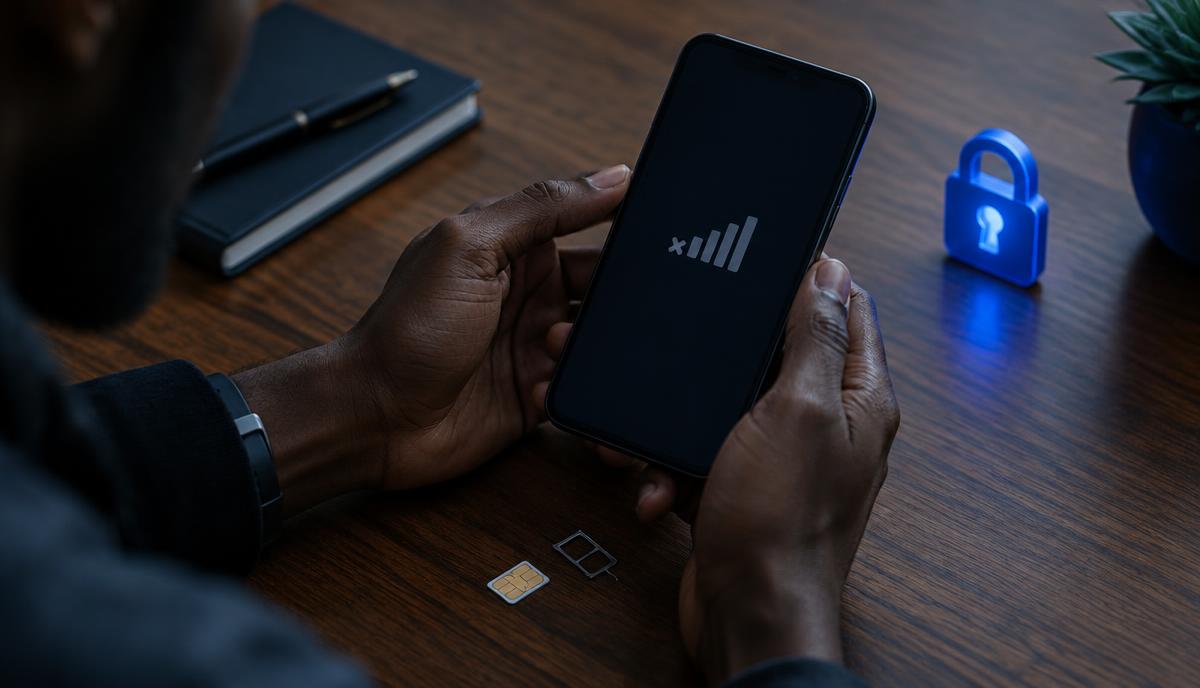
- Your line goes dead: your phone loses signal because the number is now active on their SIM.
- They receive your OTPs: they log in to your banking or wallet app and transfer money out quickly.
Warning signs to watch for
- Your phone shows "No Service" or "Emergency calls only" for a long time in an area with good network.
- You get a message saying your SIM was changed or replaced when you did not ask for it.
- You stop receiving calls or SMS, while friends say your phone is "ringing".
- You get alerts for logins or password changes you did not make.
What to do immediately if it happens
- Call your network provider from another phone and ask them to block the SIM.
- Call your bank's fraud line and ask them to freeze your accounts and cards. Most Nigerian banks also allow you to block accounts with a USSD code; save your bank's code in advance.
- Change your passwords for email, banking apps and social media.
- Report it to the police and your bank in writing. Keep reference numbers.
How to protect yourself today
- Never share OTPs or PINs with anyone, even someone who says they are from your bank or network.
- Use app-based security such as your bank's in-app token or an authenticator app, instead of SMS only, where possible.
- Set a strong PIN on your SIM card (in your phone's security settings), so a stolen phone cannot easily be used.
- Turn on WhatsApp two-step verification. Our guide on how to know if your WhatsApp has been hacked shows how.
- Keep personal details private: do not post your phone number, date of birth or ID online.
- Watch out for phishing. See our list of common online scams in Nigeria.
Regulators are also acting. In Nigeria, the Nigerian Communications Commission (NCC) sets SIM registration rules linked to the NIN, and the Central Bank of Nigeria pushes banks to improve fraud controls. In Kenya, the Communications Authority oversees SIM registration. Still, your own habits are the strongest shield.
Frequently Asked Questions
Can someone do a SIM swap without my phone?
Yes. They do not need your phone, only enough of your details to convince the network or a dishonest agent.
Will my bank refund money lost to SIM swap fraud?
It depends on the bank and the investigation. Report quickly and in writing; fast reporting improves your chances.
Is eSIM safer?
eSIM can help because there is no physical card to steal, but the number can still be moved if a criminal fools the network. Good habits still matter.
How long does a fake SIM swap take to drain an account?
Sometimes only minutes. That is why acting fast when your line suddenly goes dead is so important.

Prince Anichi
Founder and Lead Technology Editor at Ortechy. Covering digital economy shifts, tech ecosystems across Africa, cybersecurity intelligence, and emerging software platforms.