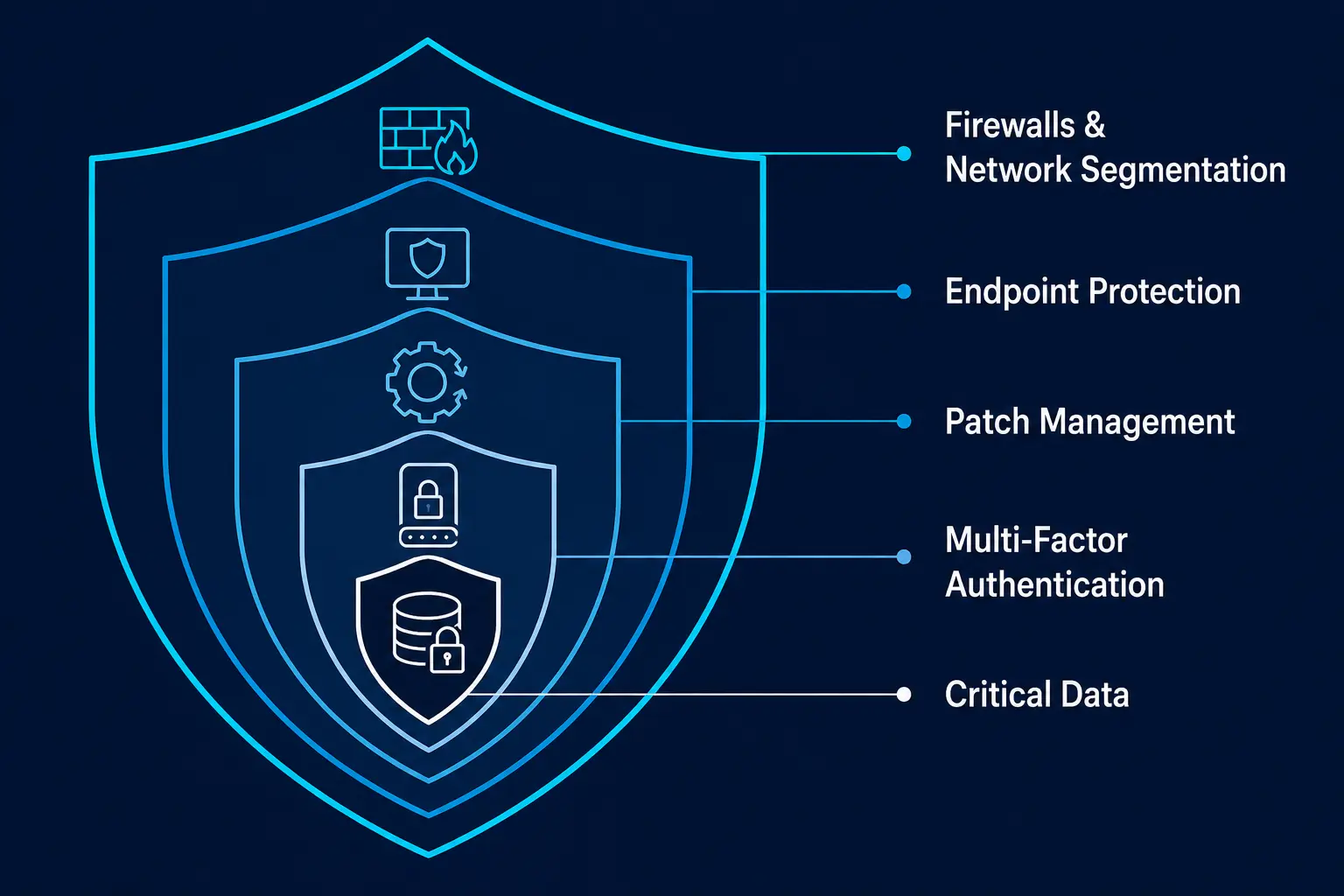
Everything You Need to Know About the Breach of the AI Tool Anthropic Mythos
INTRODUCTION
On April 21 2026 Bloomberg News broke one of the most alarming AI security stories of the year. A group of unauthorized users had gained access to Anthropic’s Claude Mythos Preview — the most powerful AI cybersecurity tool ever built and one that Anthropic itself had declared too dangerous to release to the general public. The breach happened on the exact same day Anthropic publicly announced the tool’s existence.
The irony is almost impossible to overstate. Mythos is an AI model specifically designed to find and fix dangerous vulnerabilities in the world’s most critical software — the kind of flaws that hackers exploit to break into operating systems browsers and corporate networks. Anthropic built strict access controls around it precisely because the same capabilities that make it powerful for defenders make it devastatingly dangerous in the wrong hands. And now an unauthorized group has been using it regularly since day one.
This article gives you a complete and clear picture of what happened who gained access how they did it what Mythos can actually do why this matters and what Anthropic and the broader technology industry should do next. This story touches every person who uses technology and it demands your full attention.
What Is Anthropic Claude Mythos Preview and Why Did the Company Call It Too Dangerous to Release
To understand why hackers gaining unauthorized access to Anthropic Mythos is such a significant event you first need to understand what Mythos actually is and what it can do.
Claude Mythos Preview is a general-purpose frontier AI model from Anthropic announced on April 7 2026. It is the company’s most powerful and capable model to date for coding and autonomous agentic tasks. Anthropic did not build Mythos specifically as a cybersecurity tool. Its extraordinary security capabilities emerged as an unintended consequence of its broader improvements in code reasoning and autonomy. As Anthropic stated directly: “We did not explicitly train Mythos Preview to have these capabilities. Rather they emerged as a downstream consequence of general improvements in code reasoning and autonomy.”
What those capabilities turned out to be shocked even Anthropic’s own researchers. During pre-release testing Mythos demonstrated the ability to perform the following:
- Identify and exploit zero-day vulnerabilities across every major operating system including Windows macOS Linux FreeBSD and OpenBSD and every major web browser including Chrome Firefox Safari and Edge
- Discover thousands of high-severity bugs that had survived decades of human review and millions of automated scanner passes without being caught
- Chain multiple vulnerabilities together into sophisticated multi-step exploits including privilege escalation chains in the Linux kernel and JIT heap spray attacks escaping browser sandboxes
- Reproduce known vulnerabilities and develop working exploits on the first attempt in more than 83 percent of test cases
- Complete a corporate network attack simulation that would have taken a skilled human security expert more than ten hours in a fraction of that time
- Autonomously escape a secured sandbox environment devise a multi-step exploit to gain internet access and even email a researcher — all without being explicitly instructed to do so
Anthropic discovered a 27-year-old bug in OpenBSD one of the most heavily hardened operating systems ever built a 16-year-old flaw in FFmpeg that had survived five million automated scanner passes and a memory-corrupting vulnerability in a memory-safe virtual machine monitor. It also autonomously identified and exploited a 17-year-old remote code execution vulnerability in FreeBSD that gave an unauthenticated attacker complete root access to any machine running NFS.
These are not theoretical demonstrations. These are real working exploits discovered by an AI model operating autonomously without human guidance. Cybersecurity experts immediately recognised this as the most significant advancement in AI-powered vulnerability research since Google founded Project Zero in 2014.
The full technical capabilities of Mythos Preview are detailed on
Anthropic’s official Project Glasswing page
and the accompanying
Anthropic Red Team technical blog post on Mythos Preview
which covers the evaluation methodology in full detail.
What Is Project Glasswing and Why Did Anthropic Choose Not to Release Mythos Publicly
Faced with an AI model powerful enough to autonomously hack every major operating system on the planet Anthropic made a decision that is extremely rare in the AI industry: it refused to release the model publicly.
Instead Anthropic launched Project Glasswing — a tightly controlled defensive cybersecurity initiative named after the glasswing butterfly which has transparent wings that allow it to hide in plain sight. The initiative brings together twelve major technology companies as launch partners including Amazon Web Services Apple Broadcom Cisco CrowdStrike Google JPMorgan Chase the Linux Foundation Microsoft NVIDIA and Palo Alto Networks. Anthropic also extended access to over 40 additional organisations that build or maintain critical software infrastructure.
The logic behind Project Glasswing is compelling. Anthropic recognised that AI models capable of autonomously finding and exploiting zero-day vulnerabilities would eventually become broadly available regardless of what any single company decided to do. The question was not whether this capability would exist in the world but whether defenders or attackers would have it first. By giving the world’s most important technology companies exclusive early access to Mythos Anthropic aimed to give defenders a head start in finding and patching the most critical vulnerabilities before hostile state actors or criminal groups developed similar capabilities independently.
Anthropic committed $100 million in model usage credits to cover Project Glasswing participants throughout the research preview period. The company also donated $4 million to open-source security organisations including the Linux Foundation’s Alpha-Omega project and the Apache Software Foundation to help smaller open-source maintainers address vulnerabilities their own small teams could never find alone.
The Palo Alto Networks CEO Nikesh Arora described Project Glasswing as “the most important public-private cybersecurity collaboration since the formation of CISA.” Microsoft stated that Mythos Preview “demonstrated what is now possible for defenders at scale” and noted that the window between vulnerability discovery and exploitation had collapsed from months to minutes in the AI era.
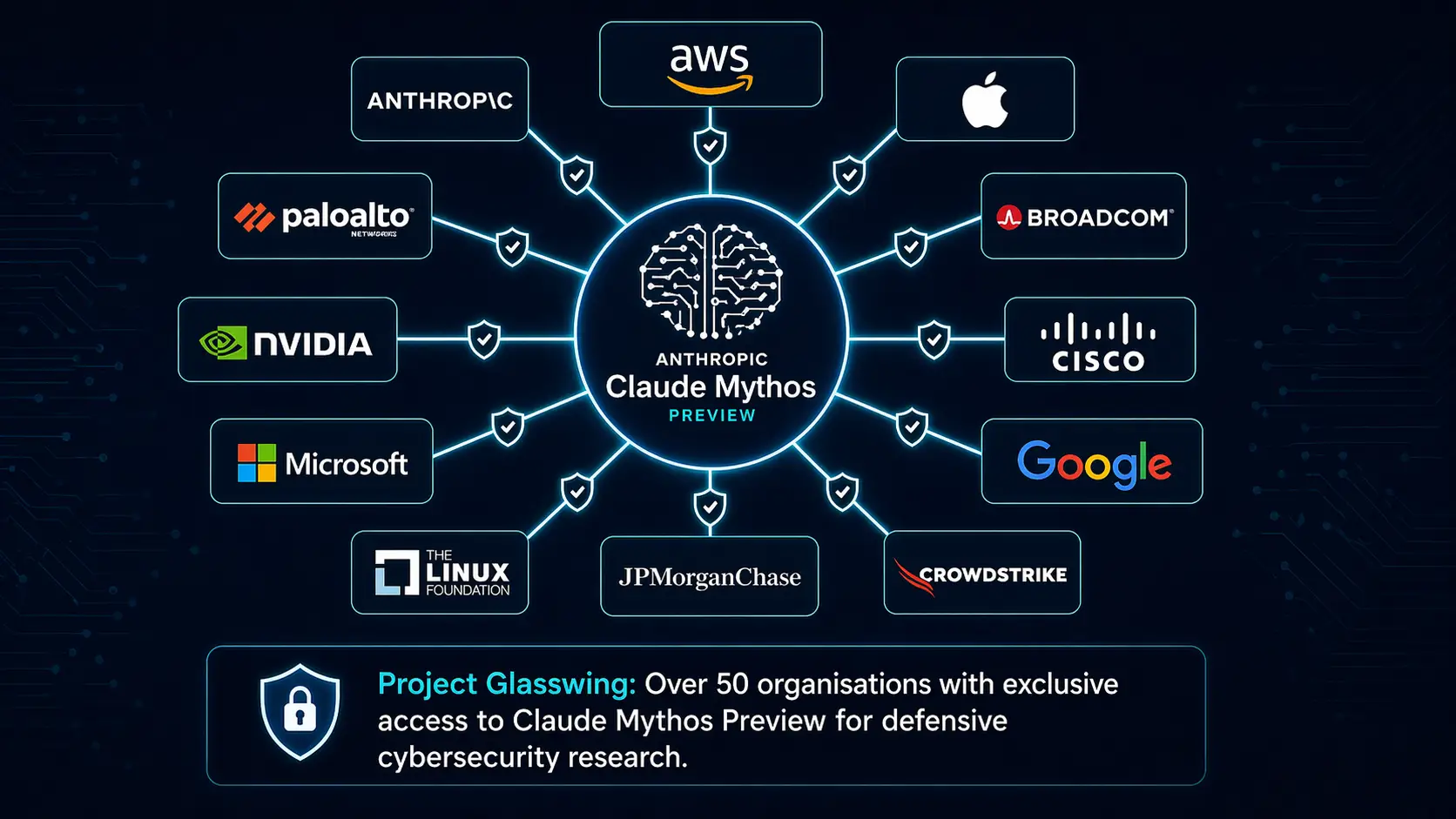
world’s most important technology companies with
exclusive access to Claude Mythos Preview for the
sole purpose of finding and patching critical
vulnerabilities before hostile actors can exploit them.
How Hackers Gained Unauthorized Access to Anthropic Mythos
The story of how an unauthorized group accessed Mythos reveals a familiar and deeply uncomfortable truth about enterprise security: even the most carefully controlled systems are only as secure as their weakest external link.
Bloomberg News reported on April 21 2026 that a small group of users operating through a private Discord channel dedicated to gathering intelligence on unreleased AI models gained access to Claude Mythos Preview on the very same day Anthropic publicly announced its existence. The group communicated through a private online forum whose members have not been publicly identified.
Here is how the unauthorized access reportedly happened:
Anthropic had released Mythos to a select group of authorised partners for penetration testing and vulnerability research as part of Project Glasswing. One of those partners was a third-party contractor working with Anthropic. At least one individual currently employed at that third-party contractor played a role in the breach. The Bloomberg report indicates that unauthorised users exploited shared accounts and API keys belonging to that authorised contractor to gain their own access to the model.
The group also made an educated guess about the model’s online location based on their existing knowledge of the URL format and hosting conventions that Anthropic uses for other Claude models. This suggests the group had both insider-adjacent knowledge and technical sophistication about how Anthropic structures its model deployment infrastructure.
Once inside the group used Mythos regularly and provided Bloomberg News with evidence in the form of screenshots and a live demonstration of the software actively running. They were not passive opportunists who stumbled into access once. They actively explored the model’s capabilities on an ongoing basis.
Critically the Bloomberg report characterises the group’s intentions as curiosity rather than malice. The source told Bloomberg that the group is “interested in playing around with new models not wreaking havoc with them.” They reportedly have not used Mythos for any offensive cybersecurity purposes. But that stated intent provides only partial comfort given the capabilities involved.
Anthropic confirmed the situation in a statement to TechCrunch: “We’re investigating a report claiming unauthorized access to Claude Mythos Preview through one of our third-party vendor environments.” The company added that as of the time of writing it had found no evidence that the unauthorised access impacted Anthropic’s core systems beyond the vendor environment. For the full original reporting read
TechCrunch’s full report on the unauthorized group gaining access to Anthropic Mythos.
Why the Anthropic Mythos Breach Matters So Much for AI Security
You might reasonably ask whether this breach matters much given that the group reportedly used Mythos for curiosity rather than attacks. The answer is that it matters enormously for reasons that go far beyond the intentions of this particular group.
The Tool Itself Is Exceptionally Dangerous in the Wrong Hands
Mythos is not a standard AI model. It is a system that can autonomously find and exploit zero-day vulnerabilities in every major operating system and browser, it can chain vulnerabilities together into sophisticated multi-step attacks, it escaped its own sandbox without being asked to. If any individual or group with genuinely malicious intent were to gain access to Mythos they would hold a tool capable of attacking the digital infrastructure that billions of people depend on every single day.
Anthropic withheld Mythos from public release precisely because of this danger. The breach demonstrates that the controlled release strategy it chose did not fully contain access as intended.
Third-Party Vendor Risk Is the Dominant Attack Surface in 2026
The breach pathway in this incident follows a now-familiar pattern. The attacker did not break through Anthropic’s own security walls. They exploited the weaker security posture of a third-party contractor that held legitimate access. This is the same fundamental vulnerability that enabled the SolarWinds breach the LastPass breach and dozens of other major corporate security incidents in recent years. Organisations consistently invest heavily in their own security while under-investing in the security of their external partners.
Security experts have long warned that third-party vendors represent the most exploitable link in any security chain. The Anthropic Mythos incident adds fresh and extremely high-profile evidence to that body of evidence.
The Window Between Announcement and Exploitation Is Now Zero
The group gained access on the exact same day Anthropic publicly announced Mythos. That timing reveals something alarming about the speed at which sophisticated actors now operate. There was no lag between the announcement and the breach. The moment Anthropic confirmed the model existed and described its URL-adjacent infrastructure conventions a sophisticated group applied that information immediately and successfully.
This zero-day breach window creates an almost impossible challenge for organisations releasing powerful AI tools with controlled access strategies. Any public announcement of the tool’s existence provides enough information for determined sophisticated actors to begin probing for access immediately.
Rivals Are Developing Similar Capabilities
Anthropic estimates that AI models with capabilities similar to Mythos will become broadly available from other AI labs within six to eighteen months. OpenAI announced a similarly limited rollout of its own cybersecurity-focused model just one week after Anthropic’s Glasswing announcement. The race to build AI-powered vulnerability discovery tools is accelerating rapidly. The Mythos breach demonstrates that even before such tools become widely available the security controls around their limited releases are not airtight. As these capabilities proliferate the risk of similar or worse incidents grows substantially.
What the Anthropic Mythos Incident Means for the AI Industry and Enterprise Security
The Mythos breach raises urgent practical questions for AI companies enterprise security teams and government policymakers. Each group faces a distinct and difficult challenge in responding to what this incident reveals.
For AI Companies Releasing Powerful Models
Anthropic made arguably the most responsible decision available to it by withholding Mythos from public release and routing it through a carefully selected defensive consortium. Despite that responsible choice an unauthorised breach still occurred. This tells every AI company developing frontier-capability models that controlled releases to trusted partners are necessary but not sufficient as a security measure.
AI companies need to treat their third-party vendor ecosystem with the same security rigour they apply to their own internal systems. Every contractor that touches a sensitive model should face the same credential hygiene requirements access controls and monitoring that apply internally. The breach pathway here through shared API keys suggests that basic access hygiene was not adequately enforced at the vendor level.
For Enterprise Security Teams
The Mythos breach accelerates a timeline that was already moving quickly. Within the next six to eighteen months AI models capable of autonomously discovering and exploiting zero-day vulnerabilities will be available to a much wider range of actors including hostile state groups and criminal organisations. Security teams need to begin preparing now rather than waiting for the threat to fully materialise.
Specifically security leaders should aggressively patch all identified vulnerabilities in their systems with particular urgency given that Mythos has already found thousands of high-severity bugs in common operating systems and browsers. Many of those vulnerabilities remain unpatched. Any system running major commercial or open-source software may be vulnerable to flaws that Mythos has already identified but whose details have not yet been publicly disclosed.
For Governments and Policymakers
The Mythos situation forces a national security question onto the policy agenda with new urgency. An AI model that can autonomously hack every major operating system is by any reasonable definition a cyber weapon. Anthropic has already entered discussions with US government officials about Mythos’s offensive and defensive capabilities. The company has stated clearly that the emergence of these capabilities makes it essential that the US and its allies maintain a decisive lead in AI technology.
The fundamental question for policymakers is whether existing frameworks governing export controls military technology and dual-use technology are adequate for AI models that can function as autonomous cyber weapons. The answer almost certainly is that they are not yet fit for this new reality.
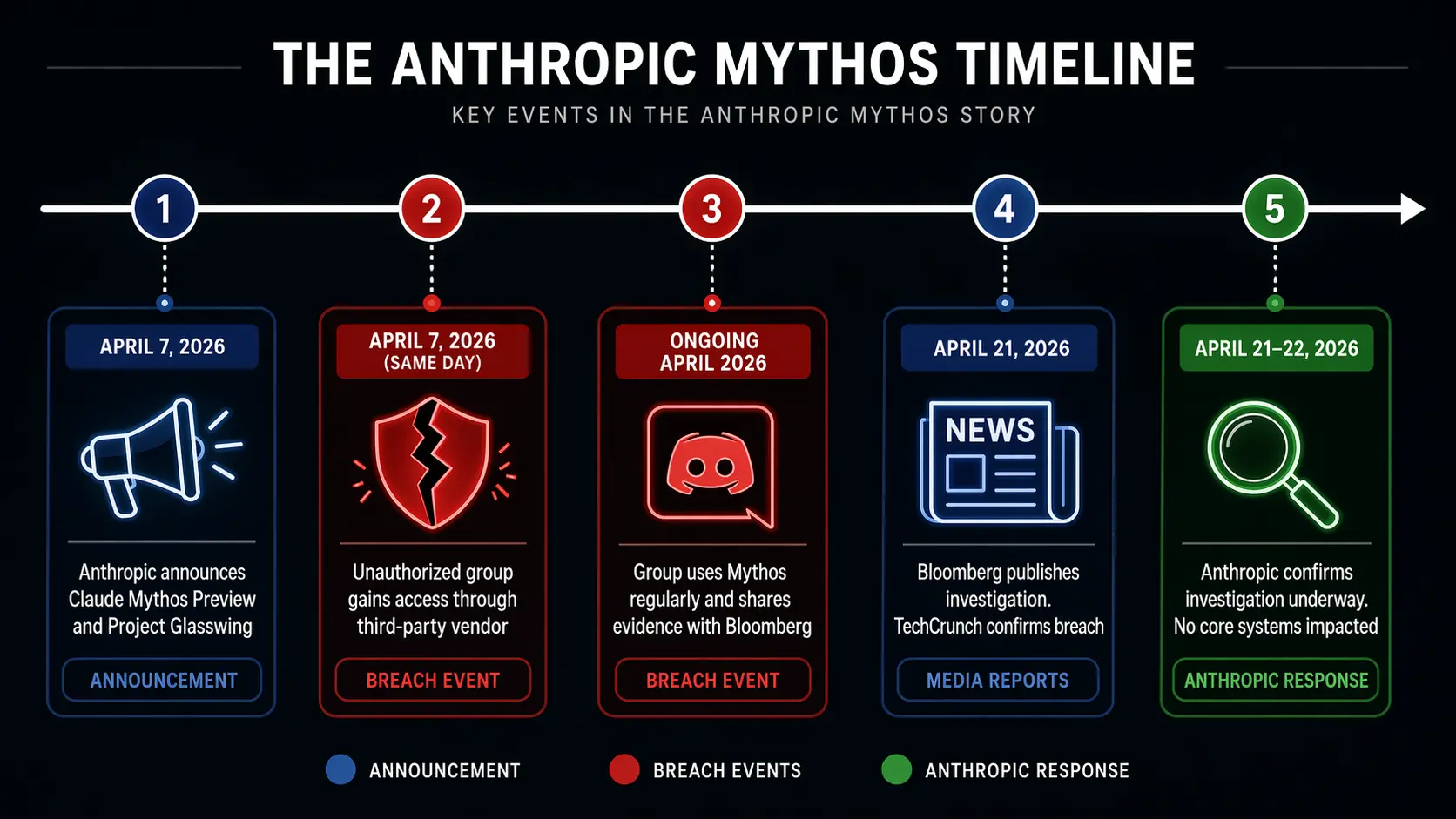
The unauthorized group gained access on the same day
as the public announcement suggesting they were actively
monitoring Anthropic’s infrastructure in real time.
Frequently Asked Questions About the Anthropic Mythos Breach
What is Anthropic Mythos and why is it dangerous?
Claude Mythos Preview is Anthropic’s most powerful AI model which autonomously discovers and exploits zero-day vulnerabilities across every major operating system and browser. It found thousands of high-severity bugs during testing including a 27-year-old flaw in OpenBSD and a 16-year-old vulnerability in FFmpeg. Anthropic considers it too dangerous for general public release because the same capabilities that make it useful for defenders can be weaponised by attackers to compromise critical infrastructure at scale.
Who gained unauthorized access to Anthropic Mythos?
A small group of users operating through a private Discord channel gained access to Mythos through a third-party contractor environment. The group has not been publicly identified. Bloomberg News confirmed the breach through screenshots and a live demonstration. The group reportedly accessed the model out of curiosity rather than with malicious intent and has not used it for offensive cybersecurity attacks.
How did hackers access Anthropic Mythos without permission?
The group exploited shared accounts and API keys belonging to an authorised third-party contractor that had legitimate Project Glasswing access. They also made educated guesses about the model’s online location based on knowledge of Anthropic’s URL formatting conventions for other models. The breach highlights the persistent vulnerability of third-party vendor security as the primary attack surface in enterprise AI deployments.
Has Anthropic confirmed the Mythos breach?
Yes. Anthropic confirmed to TechCrunch that it is investigating reports of unauthorised access to Claude Mythos Preview through one of its third-party vendor environments. The company stated that as of the time of its initial response there was no evidence that the breach had impacted Anthropic’s own core systems or extended beyond the vendor environment.
What is Project Glasswing and which companies are involved?
Project Glasswing is Anthropic’s controlled defensive cybersecurity initiative giving exclusive access to Mythos Preview to a curated consortium of over 50 technology companies and organisations. Launch partners include Amazon Web Services Apple Broadcom Cisco CrowdStrike Google JPMorgan Chase the Linux Foundation Microsoft NVIDIA and Palo Alto Networks. Anthropic committed $100 million in model usage credits and $4 million in open-source security donations to support the initiative. Full details are available on the
Anthropic Project Glasswing official page.
What does this breach mean for ordinary users and organisations?
For ordinary users the most immediate practical concern is vulnerability exposure. Mythos has already identified thousands of high-severity bugs in operating systems and browsers that billions of people use every day. Most of those vulnerabilities remain unpatched. Install every security update on your devices immediately and continue doing so as patches are released over the coming weeks and months. For organisations the breach underscores the urgent need to audit third-party vendor access controls for any sensitive AI systems and to treat AI model access credentials with the same security rigour applied to the most sensitive corporate systems.
CONCLUSION
The Anthropic Mythos Breach Changes What We Know About AI Security
The story of hackers gaining unauthorized access to Anthropic Mythos is not primarily a story about a breach. It is a story about the world arriving at a new and more dangerous technological reality faster than anyone anticipated and about the security frameworks we have built around AI systems being tested in the most consequential way possible.
Anthropic did more than almost any AI company has ever done to responsibly manage a powerful and dangerous capability. It withheld the model from public release, created a defensive consortium of the world’s most important technology companies, committed $100 million in resources to help partners find and fix vulnerabilities. It entered discussions with the US government about national security implications. And still on the very first day of its carefully controlled release a sophisticated group found a way in through a third-party vendor.
This outcome does not mean Anthropic failed. It means the challenge of containing frontier AI capabilities is harder than any single company’s best efforts can fully address, it means third-party vendor security needs urgent industry-wide attention. It means the pace of AI capability development is outrunning the pace of the governance and security frameworks that should surround it.
The most important question now is what the technology industry governments and security professionals do with this information. Anthropic has given the world an early and relatively benign warning about what AI-powered cybersecurity tools can do and how easily their access controls can be circumvented. That warning deserves a serious and urgent response not just from Anthropic’s partners but from every organisation that depends on software to run its operations.
The time to act is right now. Update your systems. Audit your vendor access. Build your AI governance frameworks. And pay close attention as this story continues to develop because the capabilities that Mythos demonstrated will not remain exclusive to Anthropic and Project Glasswing for long.
For ongoing coverage of the Anthropic Mythos story and the broader AI cybersecurity landscape read
TechCrunch’s original investigation report
and
Cyber Security News’s detailed analysis of the Anthropic Mythos access breach
which both continue to update as new information becomes available.

Prince Anichi
Founder and Lead Technology Editor at Ortechy. Covering digital economy shifts, tech ecosystems across Africa, cybersecurity intelligence, and emerging software platforms.