Should I Buy a Refurbished Smartphone in 2026? Here Is the Honest Answer
The refurbished smartphone market has quietly become one of the fastest-growing segments in consumer tech. In 2026, the global market sits at around $78.6 billion and is projected to reach $135.4 billion by 2033, according to Persistence Market Research. That kind of growth does not happen without good reason. Millions of buyers are discovering that buying a refurbished smartphone in 2026 makes more financial and practical sense than many assume.
The hesitation is understandable. “Refurbished” carries a stigma that does not match the reality of the modern secondary market. Apple sells refurbished iPhones through its official store. Samsung restores Galaxy devices to like-new condition and backs them with a one-year warranty. Specialist platforms like Back Market have built entire businesses around quality control and transparency. The industry has grown up significantly in the last three years.
This guide covers everything you need to make a smart decision. We look at the real cost savings, how grading works, which platforms to trust, what the risks are, and the environmental case for going refurbished. By the end, you will know exactly whether a refurbished smartphone is right for you in 2026.
What Does Refurbished Actually Mean in 2026?
The word “refurbished” is used loosely, and that inconsistency is where most buyer confusion starts. A refurbished phone is not simply a used phone. It has been returned to a seller or manufacturer, professionally tested across dozens of functional checkpoints, repaired where needed, and certified fit for resale. That is a meaningfully different product from something your neighbour lists on Facebook Marketplace.
Refurbished vs Used: The Key Difference
A used phone is sold as-is by its previous owner, with no guarantees on function, battery health, or history. A refurbished phone has gone through a documented restoration process. Reputable certified programmes test over 30 individual functions, replace worn components, wipe all previous data, and issue the device with a warranty before it reaches a buyer.
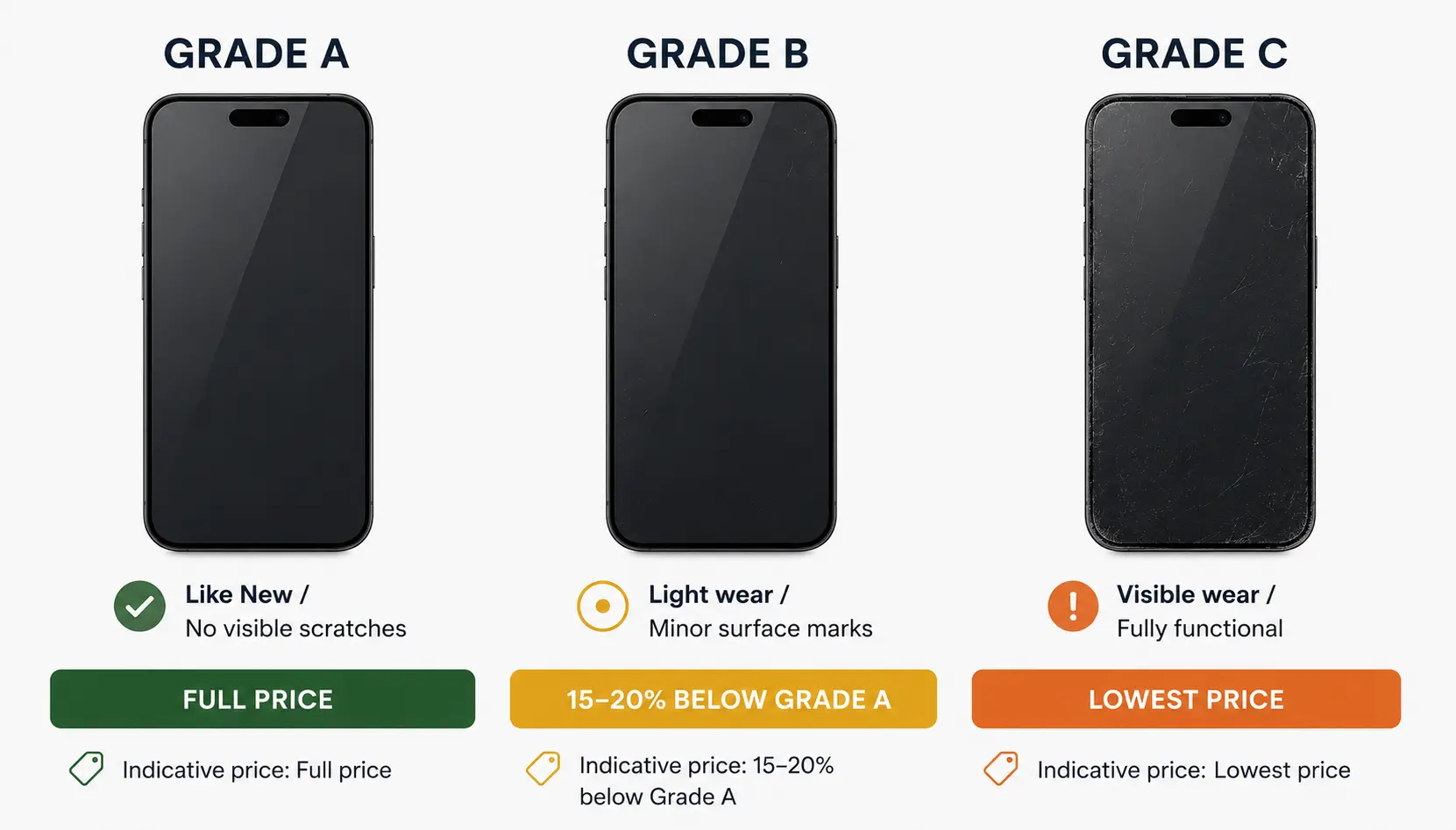
The grading system is what gives buyers clarity on cosmetic condition. Grade A devices show minimal to no signs of use and are often indistinguishable from new. Grade B devices have light scratches or scuffs that do not affect function. Grade C devices carry visible wear but are still fully operational. Not all sellers define these grades identically, which is why buying from a certified platform matters more than the grade label alone.
Who Refurbishes Phones?
There are three main sources. First, original equipment manufacturers like Apple and Samsung, which restore and resell their own returned devices using genuine parts. Second, certified third-party platforms like Back Market, Swappie, and Amazon Renewed, which work with networks of professional refurbishers. Third, independent resellers, which represent the highest variance in quality and the greatest risk for buyers who do not do their research.
The distinction matters because Consumer Reports notes that Apple’s refurbished iPhones come with a new battery, new outer shell, new cables, and fresh packaging, making them essentially indistinguishable from a new unit except for the price. That level of restoration is not universal across all sellers.
How Much Can You Actually Save Buying a Refurbished Smartphone?
Cost savings are the primary reason most people consider going refurbished. The numbers are genuinely significant. Certified refurbished devices typically sell at 40 to 70 percent below the original retail price, depending on the model, grade, and how recently it was released.
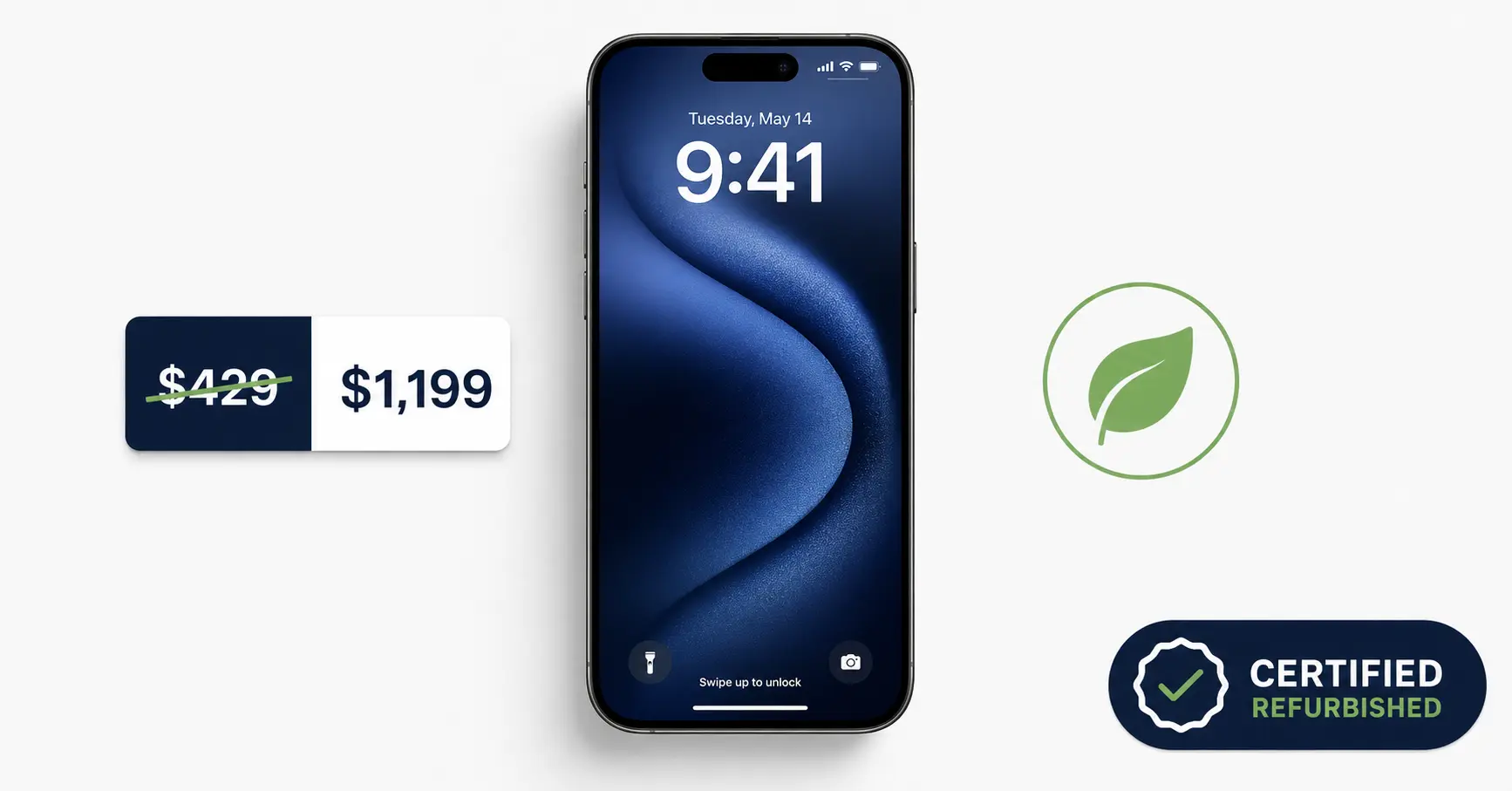
To put that in concrete terms: a refurbished iPhone 15 Pro Max in Grade A condition currently sells for around $600 to $700 on reputable platforms, versus the $1,199 launch price. A refurbished Samsung Galaxy S25 in Grade B can be found for well under $500. These are flagship-tier devices offering high-end camera systems, fast processors, and multi-year software support, at mid-range prices.
Where the Real Value Lies
The smartest value in refurbished phones sits one to two generations behind the current flagship. A phone released 18 months ago has already taken its biggest depreciation hit. Its hardware is still more than capable for almost every everyday task. Its software support window is still several years long. And its refurbished price reflects none of its remaining capability.
Consider the refurbished iPhone 14 Pro Max. At launch in 2022, it cost $1,099. In 2026, refurbished Grade A units are available for around $380 to $420. That device still runs iOS 19 or later, still shoots excellent video, still carries the A16 Bionic chip which outperforms 2026 mid-range processors, and still has years of Apple software support remaining. You are getting a device that cost over $1,000 new for roughly a third of that price.
The Hidden Costs to Watch For
Savings can erode if you are not careful. Battery replacement is the most common post-purchase cost on older refurbished units that did not receive a fresh battery during refurbishment. A replacement typically costs between $50 and $100 at a certified repair shop. Accessories are rarely included with refurbished devices, which means budgeting for a cable and charger separately. Finally, some sellers offer only 90-day warranties, which is a red flag worth noting before you buy.
Understanding Refurbished Smartphone Grading Systems
The grading system is the most important thing to understand before buying a certified refurbished phone. Because there is no universal industry standard, two sellers can use the same grade label to describe very different conditions. Learning to read grading descriptions rather than just the letter is a non-negotiable part of buying refurbished.
Grade A: Like New
Grade A devices are the closest thing to a new phone without paying new-phone prices. They typically show no visible scratches under normal lighting, have battery health above 85 percent, and pass all functional tests. Some sellers further split this into Grade A+ or “Pristine” to indicate devices that have never actually been used, only returned unopened or lightly handled.
Grade B: Good Condition
Grade B phones have light cosmetic signs of use. You might notice fine scratches on the screen or casing under bright light, but nothing that affects the display or function. These are the best value tier for most buyers. The performance difference between Grade A and Grade B is zero. The price difference can be 15 to 20 percent. For most people, Grade B is where the smartest money goes.
Grade C: Heavy Wear
Grade C devices are fully functional but carry noticeable cosmetic damage including deeper scratches, scuffs, or discolouration. These suit buyers who prioritise budget above all else and plan to use a case anyway. They are not a good choice for anyone who cares about the physical condition of their device.
One practical tip: always ask the seller for timestamped photos of the actual device, not stock images. Reputable platforms provide this as standard. If they do not, treat that as a signal to look elsewhere.
Which Platforms Are Safe for Buying a Refurbished Smartphone?
Where you buy matters as much as what you buy. The refurbished market has trustworthy players and unreliable ones, and the difference between them is significant when things go wrong.
Manufacturer Certified Programmes
Buying directly from Apple, Samsung, or Google gives you the highest confidence. Apple’s refurbished store uses genuine replacement parts, includes a new battery and outer shell, and covers the device with a full one-year warranty and 14-day return window. Samsung’s certified renewed programme makes the same like-new promise with a one-year warranty. Consumer Reports confirms that Google also offers a one-year warranty on its certified refurbished Pixel devices. The trade-off is selection: these official stores often have limited stock, and not every model is available in every market.
Specialist Refurbished Marketplaces
Platforms like Back Market, Swappie, and Refurbed have built their entire business model around quality verification and buyer protection. Back Market, which reached 17 million active users in early 2025, works with a network of certified independent refurbishers who must meet minimum standards for testing, grading, and warranty coverage. These platforms offer wider device selection than manufacturer stores and often competitive pricing. Their buyer protection policies and return windows are generally strong.
General Retail and Marketplace Risks
Amazon Renewed and Best Buy offer refurbished phones, but warranty coverage is shorter at 90 days compared to the one-year standard from manufacturers and specialist platforms. eBay provides the widest selection but also the widest quality variance. Any listing without a clear warranty, IMEI check, and stated grading process should be avoided entirely. Always verify the IMEI number through a carrier check tool before completing a purchase on any general marketplace.
What Are the Real Risks of Buying Refurbished?
Buying a refurbished smartphone is not risk-free. Being honest about the downsides is more useful than pretending they do not exist.
Battery Health
This is the most common issue with refurbished phones. Battery capacity degrades with charge cycles, and not every refurbisher replaces the battery as standard. A device with poor battery health will frustrate you within six months. Always check whether the listing specifies a new or tested battery. Certified programmes from Apple, Samsung, and quality marketplaces typically guarantee battery health above 80 to 85 percent. If a listing is silent on battery condition, assume the worst.
Software Support Window
Buying an older model at a discount only makes sense if that model still has meaningful software support remaining. Apple typically provides iOS updates for five to six years from a device’s original release, while Samsung now offers up to seven years of updates on its recent Galaxy flagship series and Google offers the same for Pixel 9 series devices. A phone that is already four years old and has only one year of support left is a poor buy at any price. Always check the device’s original release year before buying.
Data Security
A properly refurbished phone should arrive with all previous data fully wiped to factory settings. Reputable platforms follow certified data sanitisation protocols. The risk arises with unverified sellers who may not have thoroughly cleared the device. When you receive any refurbished phone, do a full factory reset before setting it up, regardless of what the seller says. This takes three minutes and eliminates any residual data risk.
Counterfeit and Misrepresented Devices
Counterfeit devices and misrepresented models are real risks on unregulated marketplaces. Always verify the model number in the phone’s settings against what was listed. Cross-check the IMEI number on a carrier checker to confirm the device is not reported stolen or carrier-locked. This process takes under ten minutes and protects you from the most common deceptive practices in the secondary market.
The Environmental Case for Choosing Refurbished
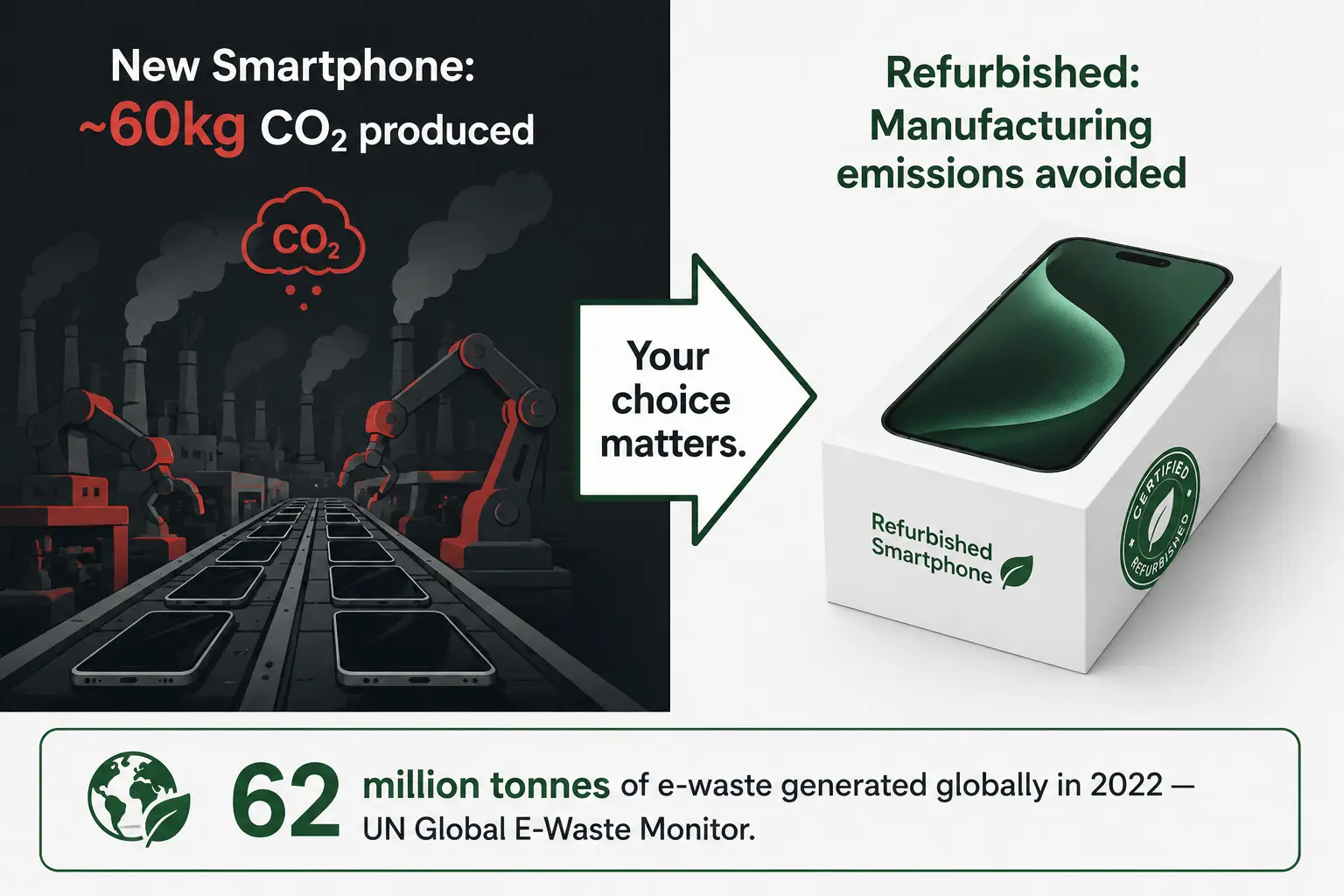
The environmental argument for refurbished smartphones has shifted from a niche concern to a mainstream consideration. Manufacturing a single new smartphone generates approximately 60 kilograms of carbon dioxide emissions, with over 85 percent of a device’s total lifetime carbon footprint concentrated in the production phase alone. Buying refurbished avoids that manufacturing impact entirely.
A modern smartphone contains over 60 chemical elements including cobalt, tantalum, lithium, and rare earth metals. Mining these materials is destructive, energy-intensive, and often concentrated in regions with significant human rights concerns. Extending the life of an existing device removes the demand signal for that mining activity. According to research cited by Back Market from the French Environment and Energy Management Agency (ADEME), refurbished smartphones consistently show significantly lower environmental impact than new devices across every lifecycle metric studied.
The scale of the problem makes individual choices matter more than they might seem. The UN Global E-Waste Monitor recorded 62 million tonnes of electronic waste generated worldwide in 2022, growing by roughly 2.5 million tonnes every year. Only 17.4 percent of that waste is properly collected and recycled. Every refurbished device sold is one fewer device heading toward that pile. For buyers who care about their environmental impact, the case for refurbished is not aspirational. It is backed by measurement.
Should You Buy a Refurbished Smartphone for 5G in 2026?
5G connectivity is now a standard feature on flagship devices released from 2021 onwards, which means most quality refurbished phones available in 2026 already support it. The concern that going refurbished means missing out on current network technology is largely outdated.
The practical question is whether 5G coverage in your area justifies seeking it out. In urban centres across North America, Europe, and much of Asia Pacific, 5G is widely available and the refurbished phones priced in the $300 to $600 range will access it without issue. In rural or developing markets where 4G LTE is still the dominant standard, 5G support in a refurbished device is a nice future-proofing bonus rather than an immediate necessity.
Do not let the 5G question push you toward buying a newer refurbished model than you need. A refurbished iPhone 13 or Samsung Galaxy S21 already has 5G. You do not need a device from the last 12 months to stay connected to modern networks. This is one of the cleanest value arguments for the refurbished market in 2026.
Who Should and Should Not Buy Refurbished in 2026?
Refurbished smartphones are not the right choice for every buyer in every situation. Being clear about this avoids mismatched expectations.
Refurbished Makes Sense If You
- Want flagship hardware without paying flagship prices
- Are comfortable buying one to two generations behind the current release
- Are buying a phone for a child, elderly relative, or as a backup device
- Care about reducing your environmental footprint
- Are willing to spend five minutes checking IMEI, warranty, and battery details before buying
- Can wait a few extra days for shipping from a certified platform
Refurbished May Not Suit You If You
- Need the absolute latest camera or AI features not yet available on older models
- Require a specific colour or storage configuration that is hard to find in secondary markets
- Want to finance the device through a carrier plan, which typically requires a new device
- Are purchasing for a business with strict device management or security compliance requirements that mandate certified-new hardware
The honest reality is that for the majority of everyday smartphone users, a refurbished Grade A device from a certified platform delivers a near-identical experience to a new phone, at a fraction of the price, and with a meaningfully smaller environmental impact. The minority of buyers who genuinely need the absolute latest release are the exception, not the rule.
Tips for Buying a Refurbished Smartphone Without Getting Burned
These are the non-negotiable steps before completing any refurbished smartphone purchase.
- Check the IMEI number on a carrier blacklist tool to confirm the device is not reported stolen and is not locked to a carrier you cannot use.
- Verify battery health is specified in the listing. Look for a minimum of 80 percent capacity, and ideally above 85 percent for a device you plan to use for two or more years.
- Confirm the warranty duration. One year is the acceptable minimum. Anything shorter than 90 days is insufficient protection.
- Check the return window. A minimum of 30 days gives you enough time to identify any functional issues that do not appear immediately.
- Look up the device’s original release year and cross-reference with the manufacturer’s support timeline to confirm how many years of updates remain.
- Buy from a certified seller, whether that is a manufacturer’s official refurbished store or a reputable specialist platform. Avoid listings with no verifiable seller history.
- Do a full factory reset on arrival before logging into any personal accounts, regardless of what the seller claims about data wiping.
According to Technavio’s refurbished smartphone market analysis, the adoption of AI-powered grading and pricing tools is improving quality consistency across the sector. This means the gap in reliability between certified platforms and informal sellers is widening, making platform selection even more important than it was two years ago.
Frequently Asked Questions
Is buying a refurbished smartphone safe in 2026?
Yes, when purchased from a certified seller. Reputable platforms and manufacturer programmes test devices across dozens of checkpoints, replace worn components, wipe all data, and issue a warranty. The risk lies in buying from unverified sellers with no returns policy or warranty. Stick to certified channels and the process is straightforward.
How long will a refurbished phone last?
A well-maintained refurbished Samsung or Apple device can last three to five years from the date of purchase, depending on the model and your usage habits. The key variable is battery health. A device with a new or recently replaced battery will last significantly longer than one running on its original battery with heavy cycle degradation. Check battery health before buying.
Do refurbished phones get software updates?
Yes. A refurbished phone receives exactly the same software and security updates as a new device of the same model. Updates are tied to the device model, not to whether it was sold new or refurbished. Apple supports iPhones for five to six years from original release, Samsung and Google now offer up to seven years of updates on recent flagship models.
What is the difference between refurbished and certified pre-owned?
These terms are often used interchangeably but certified pre-owned, or CPO, typically refers specifically to manufacturer-backed programmes. Refurbished is a broader term that covers both manufacturer and third-party restored devices. In both cases, the device has been tested and comes with a warranty. Manufacturer CPO programmes generally offer the highest parts quality and tightest quality control.
Will a refurbished phone work with my carrier?
It depends on the specific device. Always check the IMEI number to confirm the phone is unlocked or compatible with your carrier before purchasing. Phones sold through manufacturer refurbished stores and reputable platforms are typically sold unlocked. Devices from general marketplaces may carry carrier locks, so verification is essential.
Is a refurbished iPhone better value than a new budget Android in 2026?
In most cases, yes. A refurbished iPhone 14 or 15 at $380 to $450 offers better processing power, camera quality, software support longevity, and resale value than a new budget Android at the same price point. The refurbished flagship approach consistently beats new mid-range hardware for buyers who want the best performance per dollar spent.